Published on Thu May 15 2025
Updated on Fri Aug 08 2025
8 minute read
Ever found yourself in a situation so sticky, you caught yourself thinking "surely, someone else will deal with it"? Or, picture this, you're walking down a bustling street, and you spot a piece of litter but don’t pick it up. The thought crosses your mind, “Isn’t that what street cleaners are for?” If this sounds familiar, congratulations, you've just encountered diffusion of responsibility, a problematic behavior that tends to emerge in a crowd. In today’s blog, we're diving deep into what diffusion of responsibility really means. We'll provide examples, dissect its importance, and explore effective strategies for overcoming it. This phenomenon isn't just something trivial. It's a critical issue in society that affects how we interact with people around us. How we respond to situations that require us to do something. Whether it's a minor issue like littering or more severe incidents that require immediate action, doesn’t matter. Understanding and addressing diffusion of responsibility are the main things for creating a proactive and supportive workplace. So, let’s not wait around for someone else to make the first move. Let’s jump right in, because if we don’t tackle this issue head-on - who will?
Diffusion of responsibility is a thing that occurs when individuals in a group or crowd don’t feel like they have to take action or take responsibility for something. The reason for this is because they believe that others around them will do something. This concept is closely related to the bystander effect, where the presence of people around us discourages an individual from intervening in an emergency situation. All because they feel somebody else will do it. For example, if you’ve ever lived in a dorm or had multiple roommates, you know how inactivity about cleaning can go out of control. One of you left a couple of dishes in the sink. Each one of you passes the sink multiple times a day and nobody cleans the dishes. Before you know it, there’s more dishes in the sink. The problem here is that you know that cleaning isn’t only your responsibility - but your roommates think the same thing. “I’ll let them do it.” leads to a mess.
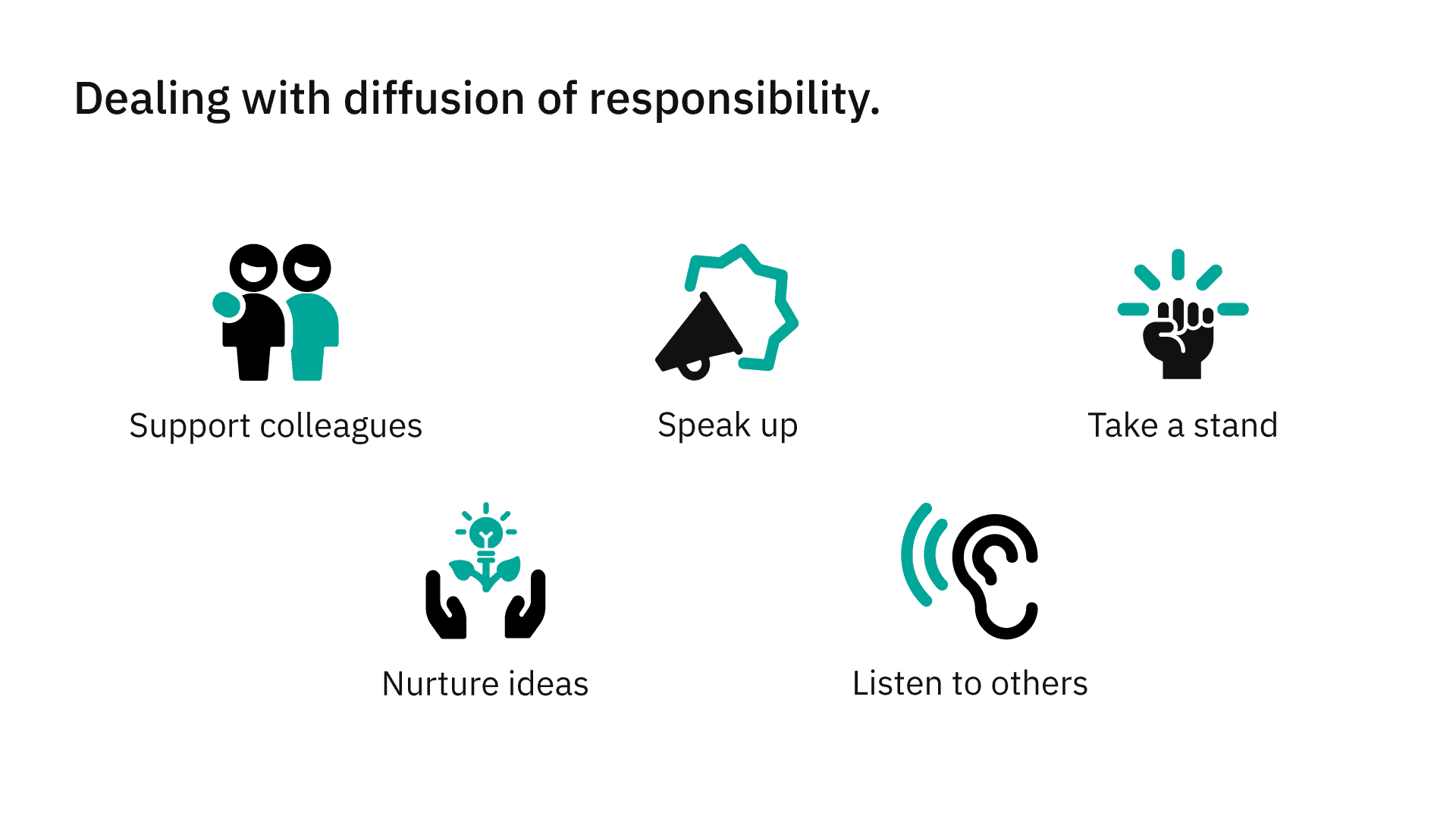
In the workplace, diffusion of responsibility is a crucial concept to grasp because it can really have an impact on how you and your colleagues function. It affects everything from productivity to morale. When people see unethical behavior but do not feel like they have to do anything about it, such behaviors become normal. This normalization can have a huge impact on how your workplace functions and the reputation it has. Disparaging, hurtful or downright offensive behavior or comments may go unaddressed. For example, if one of your colleagues makes a sexist remark, and doesn’t get any negative feedback, they will continue with inappropriate behavior. At that moment people may think “This is wrong, but I don’t have to be the one to bring it up”. We would rather not subject ourselves to a moment of discomfort. So, how do we avoid diffusion of responsibility?

Proper solutions, and not just bandaids, require individual effort supported by institutions inside the company. At Transcom, we truly care about our employees feeling safe and comfortable at their workplace. That’s why we have a strong whistleblower policy, and we support our employees through HR. Making sure that people’s voices and concerns are heard and, more importantly, addressed is the key to a good work environment. All of this allows for diffusion of responsibility to be sidestepped by allowing employees to not have to get into conflicts. On the other hand, the fostering of an inclusive and open workplace culture that sees people as equals is as important. Employees should encourage each other to speak up or stand up for those who can’t. Support can come from many different places, but if you feel alone amongst your peers all other sources may seem unimportant. Effectively handling diffusion of responsibility in the workplace needs a strategic approach. The focus of this approach should be building support systems for people who speak up or feel targeted. Such systems nurture an environment where employees feel empowered and accountable. By fostering a culture of transparency and open communication, organizations can dismantle the barriers people feel they have in order to act. This ensures that team members feel supported. Leadership plays a pivotal role in this process, demonstrating through their actions the value of taking initiative and the importance of each contribution, no matter its size

Created at Thu Apr 02 2026
3 min read
AI is accelerating faster than enterprise operating models were designed to handle. In every organization, transformation is underway. Roadmaps are expanding, budgets are shifting, and expectations from boards and customers are rising. But acceleration without structure creates volatility - and customer experience is no exception to the rule. While technology introduces possibility, leadership determines whether that possibility becomes measurable value or a mere disruption.
Navigating this ten

Created at Wed Apr 01 2026
6 min read
Development is no longer the hardest part of the gaming industry. After decades spent perfecting the art of building worlds, even challenger studios now have access to powerful engines, efficient collaboration pipelines, and global development teams that can consistently ship high-quality titles.
The greatest challenge gaming companies confront today - the one that separates noobs from pros? It’s all about what happens after launch: the moment players show up. That’s when the game changes, bec

Created at Fri Mar 27 2026
5 min read
Leaders’ most valuable insights don’t come from their titles. They come from lessons learnt along real professional journeys. That’s the wisdom behind our Leading Voices series charting the careers and challenges of the real pioneers behind the future of customer experience. And there couldn’t be a richer example than the story of Julie ‘Jam’ Barton. With more than 16 years of experience across both client and BPO environments, she now leads global training and communications for member servic