employment,
Published on Thu May 15 2025
Updated on Fri May 16 2025
7 minute read
Creating a welcoming and inclusive workplace is more important than ever. It not only fosters a positive environment but also drives innovation and success. But what truly sets inclusive employers apart from the rest? What practices do they follow, what environment do they create, and most importantly, how do they make their employees feel? This article delves into the noteworthy qualities of an inclusive employer, providing valuable insights for future employees that want to find the perfect place for them.
Inclusive employers are organizations that understand and appreciate that every individual is unique. They create a working environment where everyone, regardless of their background, age, gender, ethnicity, or abilities, feels valued and respected. These employers recognize that diverse perspectives can drive innovation, foster creativity, and lead to better decision making in a rapidly changing world. As discussed in our previous blog on this topic, being an inclusive employer is about more than just ticking boxes or meeting quotas - it's about creating a culture where everyone feels they belong and can succeed. Employers like this strive to create an inclusive workplace where diversity is celebrated, and differences are embraced. They go beyond simply hiring a diverse workforce; they actively promote an inclusive culture that values each employee for who they are and what they bring to the table. This means providing equal opportunities for growth and development, creating policies that prevent discrimination or bias, and fostering a work environment where open communication and collaboration are encouraged. They will support you not just in your professional but also personal growth. This is why employers like Transcom are perfect for anyone looking to feel at home in the workplace.
When searching for a new career opportunity it is important to find a good position that will advance your career. It is equally important to find a position that has a healthy workplace culture that fits not just your sentiments but also the constant growth in thought in general. Finding such places though, isn’t always as simple as it seems. So let’s dive into what specifically makes an inclusive employer and into a bit of detail as to why those qualities are important.
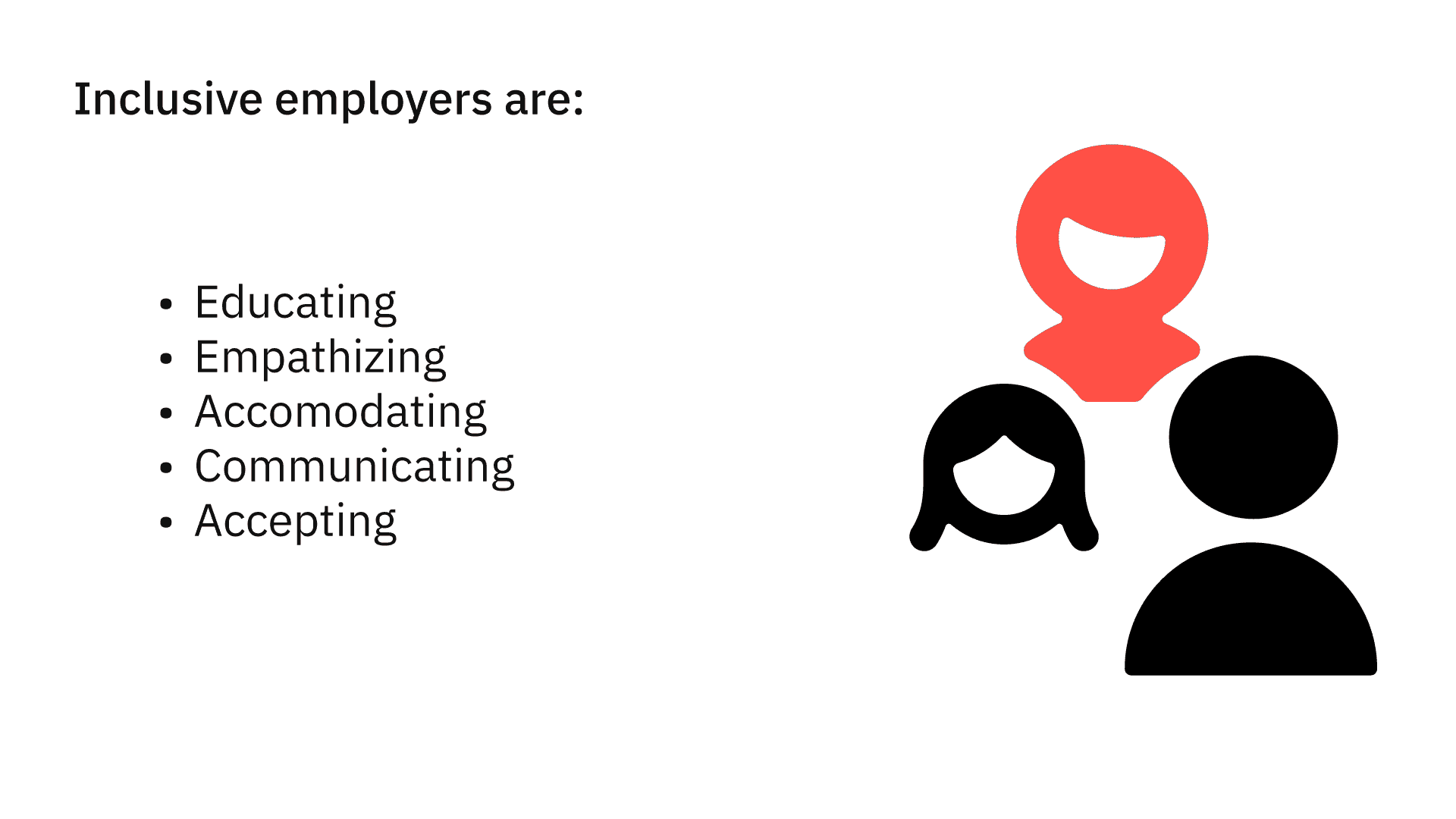
The first quality of not just inclusive employers but inclusive people in general is rooted in education. This encompasses not only educating others but also committing to a lifelong journey of self-education. By constantly seeking knowledge, we develop a sense of responsibility. Deeper understanding. Genuine compassion.
By educating themselves, employers demonstrate a willingness to embrace and appreciate individuals from diverse backgrounds and experiences. This not only fosters inclusivity but also cultivates a more inclusive and harmonious working environment where everyone feels valued and respected. Taking the initiative to educate others further contributes to the creation of an atmosphere where collaboration and understanding thrive, ultimately enhancing the overall quality of the workplace.
As one of our core values states, We're lifelong learners. Humanity is constantly growing and with that growth always come paradigm shifts. It is our duty as employers, employees, and ultimately as individuals, to actively engage in ongoing education about the world around us. This involves embracing diverse perspectives, staying informed about social issues, and continuously expanding our knowledge base. By doing so, we can foster a culture of inclusivity and contribute to positive change in our communities.
Empathy, exemplified through our We’re team players value, is an indispensable quality for inclusive employers, as it fosters a workplace culture where diversity is genuinely valued. By understanding and connecting with the varied experiences of employees, empathetic leaders can create inclusive policies and practices. This ability to comprehend diverse needs is vital for effective communication and conflict resolution, contributing to a positive and collaborative work environment. Trust is built when employees feel their concerns are not only heard but understood, leading to higher job satisfaction and loyalty.

Created at Thu Apr 23 2026
4 min read
One of the recurring themes in AI research is how close we might be to an Artificial General Intelligence (AGI). This is often described as a superintelligence - a system that would surpass the human brain and therefore create a dangerous situation where our machines can outthink and outsmart their creators.
It is an honest debate with well-known supporters. [The CEOs of OpenAI, Google DeepMind, and Anthropic](https://ai-2027.com/

A part of our value We keep our promises is the promise of open and honest communication which is a pivotal value for our organization, extending beyond client interactions to the internal fabric of our team. In an inclusive workplace, this commitment is essential for cultivating collaboration, trust, and employee satisfaction.
Being open to communication within the team is especially vital for issue resolution. An inclusive employer values providing a platform for employees to express concerns, ensuring swift and effective problem-solving. This transparency not only addresses challenges promptly but also fosters a culture of continuous improvement.
Encouraging team members to openly communicate their concerns contributes to a positive work atmosphere, empowering employees and enhancing engagement. Inclusivity, in this context, means acknowledging and addressing concerns as a proactive step towards creating a supportive and responsive workplace.
By keeping the promise of open and honest communication, employers go beyond issue resolution; they are actively building a workplace where every team member feels heard, respected, and integral to our collective success. This commitment aligns with Transcoms broader mission of inclusivity, emphasizing that everyone's voice is crucial for the organization's thriving and collaborative spirit.
The culmination of all inclusion efforts is acceptance. We named our value We come as we are and it is about accepting people whoever they are. Wherever they come from. Acceptance is the cornerstone of an inclusive workplace, creating an environment where individuals can express their authentic selves without fear of judgment. This fosters a sense of belonging, elevating job satisfaction and commitment among employees. Beyond the personal impact, acceptance challenges stereotypes, fostering an equitable and respectful workplace that nurtures psychological safety. In team dynamics, an atmosphere of acceptance enhances collaboration, creativity, and innovation, tapping into the unique strengths of each individual. It significantly contributes to employee well-being, reducing stress associated with workplace interactions. Inclusive employers prioritizing acceptance are not only more attractive to diverse talent but also align with legal and ethical principles, reflecting a commitment to anti-discrimination standards. Acceptance, therefore, goes beyond being a virtue; it is a fundamental necessity for creating a workplace culture where everyone can thrive and contribute meaningfully. It shapes an inclusive environment that values and respects the diverse qualities of each individual, setting the stage for a positive, collaborative, and diverse organizational culture.

Created at Tue Apr 14 2026
2 min read
What motivates our people to strive for the best? It’s not a mere matter of discipline, it’s the devotion that emerges when passion meets purpose. At Awesome CX, our employees do more than come to work. They show up as part of a community. One that believes customer experience is rooted in human connection, shared values, and the relationships built along the way.
Much of our work is centered on helping brands support their customers. This year, however, we took a moment to turn that focus

Created at Tue Apr 07 2026
4 min read
When you hear customer experience, you probably think of a frontline function. What comes to mind: response times, tone of voice, escalation paths, or another factor that seems downstream of your operational core? It’s time for a CX reality check.
Far from being a procedural extension of a stable system, customer experience is shaped by - and shapes - your business’s constant transitions. When warehouses migrate, when platforms change, when regulations evolve, ‘frontline’ decisions must be