What is upskilling? The best way to advance your career

CSR,
customer service,
skill improvement,
Published on Thu May 15 2025
Updated on Fri Aug 08 2025
12 minute read
You may have heard the term before, but what is upskilling really? In short, it’s the process of learning new skills or improving existing ones in order to make yourself more marketable in the job market. In fact, PwC data shows 77% of workers want to upskill, which highlights how important this area is for both employees and employers.
It could mean furthering product knowledge, developing tech competencies, or doing pretty much anything similar to keep up with modern trends and technology, giving you more up-to-date expertise. This kind of initiative helps you stay ahead of the curve, keep in tune with industry trends, creating opportunities for better employment or even becoming independent in our field without necessarily relying on a traditional degree program.
It can also help you become more adaptable with different roles or projects, and imparts other perspectives while building up your self-confidence. This is particularly crucial for organizations that want to ensure they don’t fall victim to serious skill gaps.
Do skill gaps hurt organizations?
What is upskilling versus reskilling?
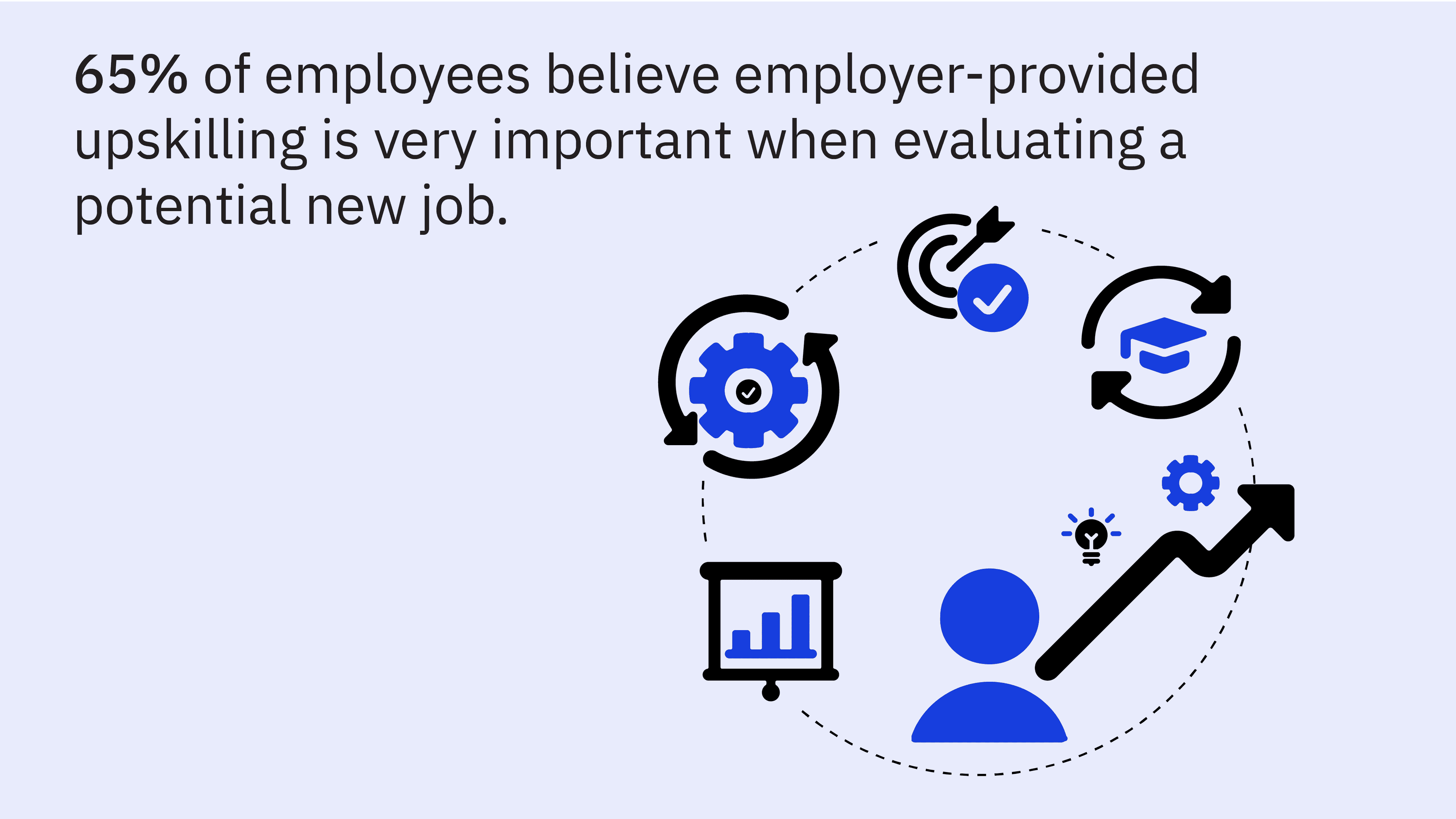
What are the top benefits of upskilling at work?
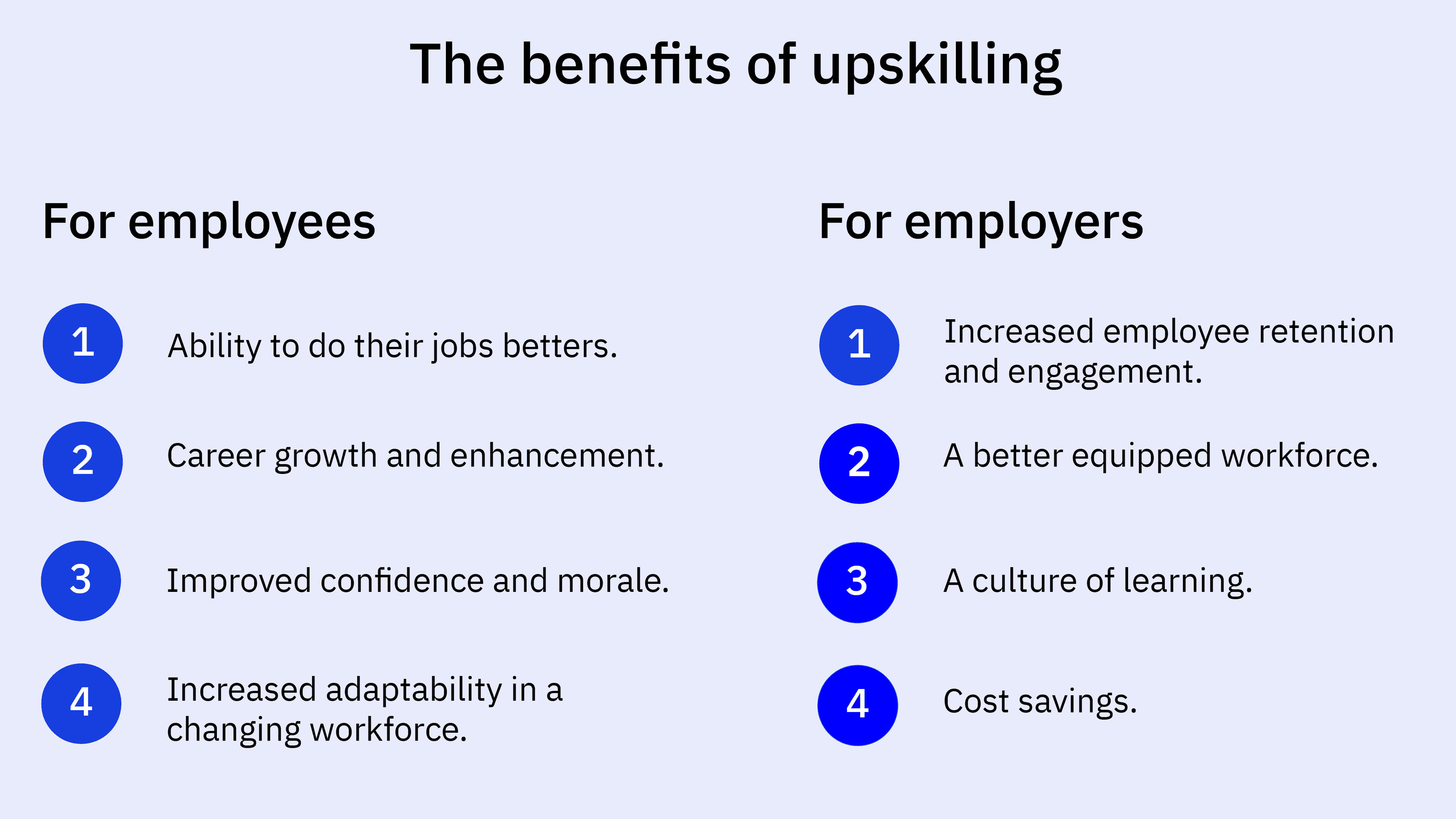
- Strengthened job security: Upskilling can help you remain competitive and marketable, increasing your chances of job retention, and reducing the risk of unemployment.
- Improved performance: Enhancing existing skills or gaining new ones can help you become more efficient in your role, improving job satisfaction and productivity.
- Increased career opportunities: It can open up more doors for you when it comes to jobs, promotions, and higher salaries.
- Enhanced professional development: Investing in training and development can help you stay ahead of the curve and increase your knowledge across multiple fields.
- Improved confidence: It can boost your self-esteem and make you more confident in your job performance.
- Improved problem solving: It can help you think critically, identify solutions to complex problems, and provide innovative ideas for your organization.
What are some common obstacles when trying to learn new skills?
Okay, so you’re thinking about picking up a few abilities that will help you along your journey or set you on a different path. But as we know, nothing comes without its challenges. So what are the main things that could stand in the way? We’ve listed a few of them below, but don’t worry - we’ll also talk about the ways in which you might overcome them.
Lack of time.
What is upskilling? Starting your journey.
Take advantage of any training courses or online classes your employer offers.
By taking the initiative to upskill yourself and stay ahead of your peers, you can demonstrate your commitment and dedication to continual learning. Taking advantage of any training courses or online classes offered by your employer is a great way of getting ahead in the workplace. Many employers are now offering free access to online courses and other resources that allow employees to grow and stay current with the latest industry trends.
Taking up these opportunities can help you gain valuable competencies that will give you a competitive edge over others in your field and make you more attractive to potential employers, or to other areas of your organization.
Identify areas where you can grow.
Participation is half the final grade.
Staying up-to-date with the latest technology and industry trends is essential if you want to remain competitive in the job market. Participating in events such as conferences or seminars can help you gain a better understanding of how certain developments are impacting your field. Many companies also offer access to discounted or free tickets for such events, so don’t be afraid to take advantage of these opportunities.
How does upskilling benefit employers?
Improved productivity.
With the right program in place, organizations can increase efficiency and productivity by developing skills. Greater knowledge leads to innovation, ease of work, and higher satisfaction for support teams.
Enhanced innovation.
With the right initiatives in place to provide space for development, you can create a culture of learning, inspiring employees to think creatively and come up with better ways of working and solutions.
Talent retention.
Offering the chance to learn skills can help retain talent, by providing them with development opportunities, avenues for career growth, and giving them motivation to stay with your brand for longer - if they feel like they’ll be ahead of the curve with you, they’ll hold on tight.
Increased employee engagement.
Upskilling programs can boost morale, increase job satisfaction, and improve employee engagement levels. At Transcom, it’s a core part of our Values - we’re lifelong learners. And all of our teams are always open to doing things better, and discovering something new.
Cost savings.
Investing in employee growth can save money in the long run by reducing training costs, hiring, and turnover expenses. By some estimates, organizations that don’t invest in upskilling their teams can spend over 2.5x as much on recruiting, onboarding, and training employees.
What is upskilling in a successful culture?
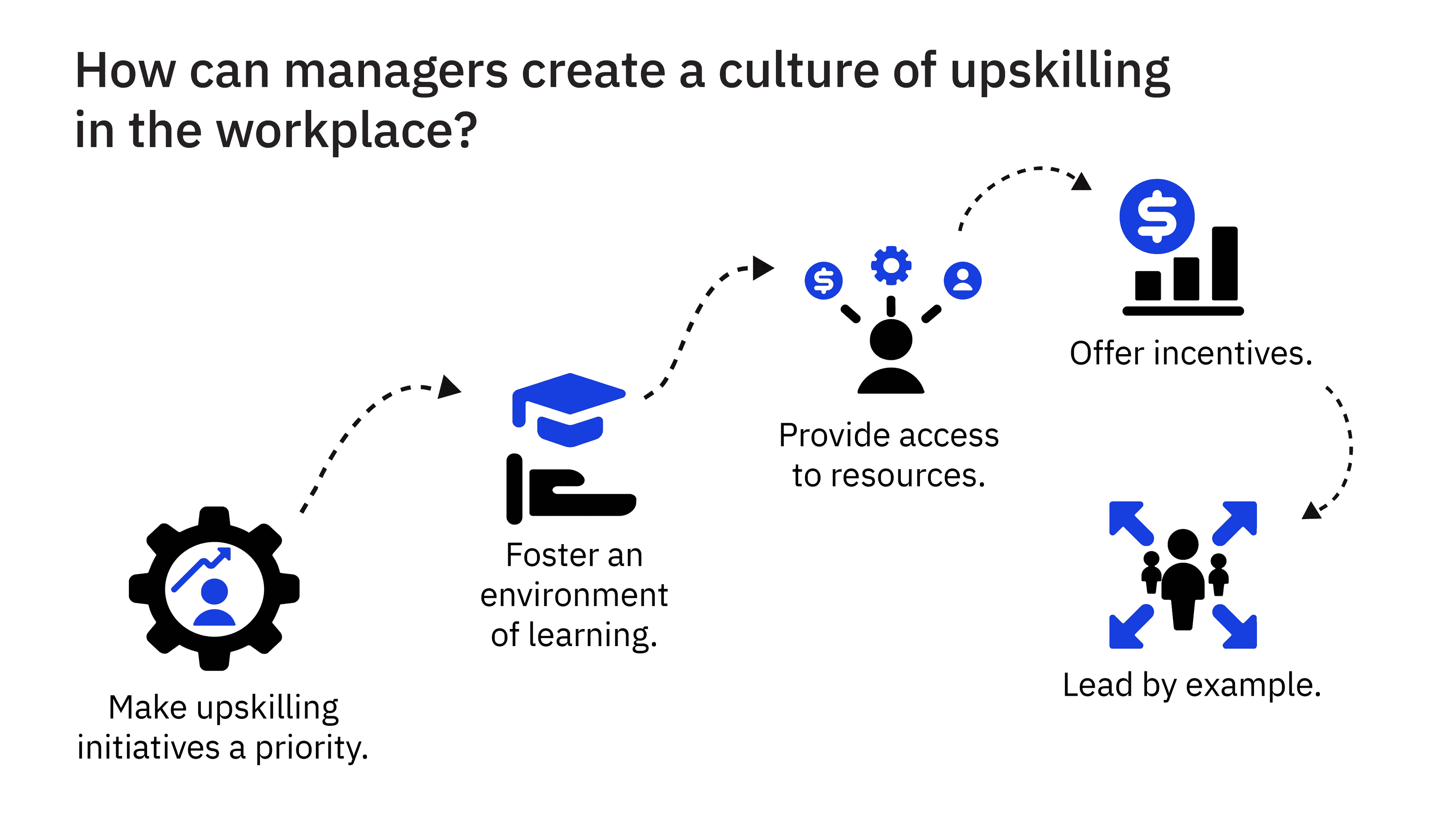
- Identify specific goals. Before you can begin building a successful program, it’s important to identify what your organization needs and how you can help achieve these goals.
- Assess current skills. Analyze each employee’s skill set and determine what additional training is needed to help them reach their goals and objectives.
- Create a plan. Develop a program that offers employees access to the resources they need to learn skills, such as industry events, seminars, digital courses and textbooks. It’s important to provide this kind of support on an organizational level, while ensuring it stay tailored to your agents’ and organization’s goals.
- Monitor results. Track outcomes of upskilling initiatives by evaluating employee performance and measuring the impact on the organization.
- Offer incentives. Create a system of rewards and recognition to encourage people to acquire new competencies and use them in their job. This is where tools such as gamification, frequently used at Transcom, can really produce fantastic results.
- Evaluate and adjust. Assess the program’s effectiveness regularly, adjusting it as needed based on feedback from employees and other stakeholders.
- Celebrate success. Recognize those who have successfully upskilled and use their stories to motivate others in the organization.
Read more
Created at Fri Jul 17 2026
5 min read
Your customers don’t love your service - they love how your brand makes them feel.
Most commentators with a connection to designing enterprise systems that manage customer experience (CX) spend a lot of time talking about how to improve customer service processes. How can we improve the multichannel experience? How can we apply AI to improve our self-service options? And so on.
But what do all the brands reading all these ideas really want? They want to reduce the cost of doing business. They want to grow their revenue by increasing sales to customers. They want to encourage