Published on Thu May 15 2025
Updated on Fri Aug 08 2025
5 minute read
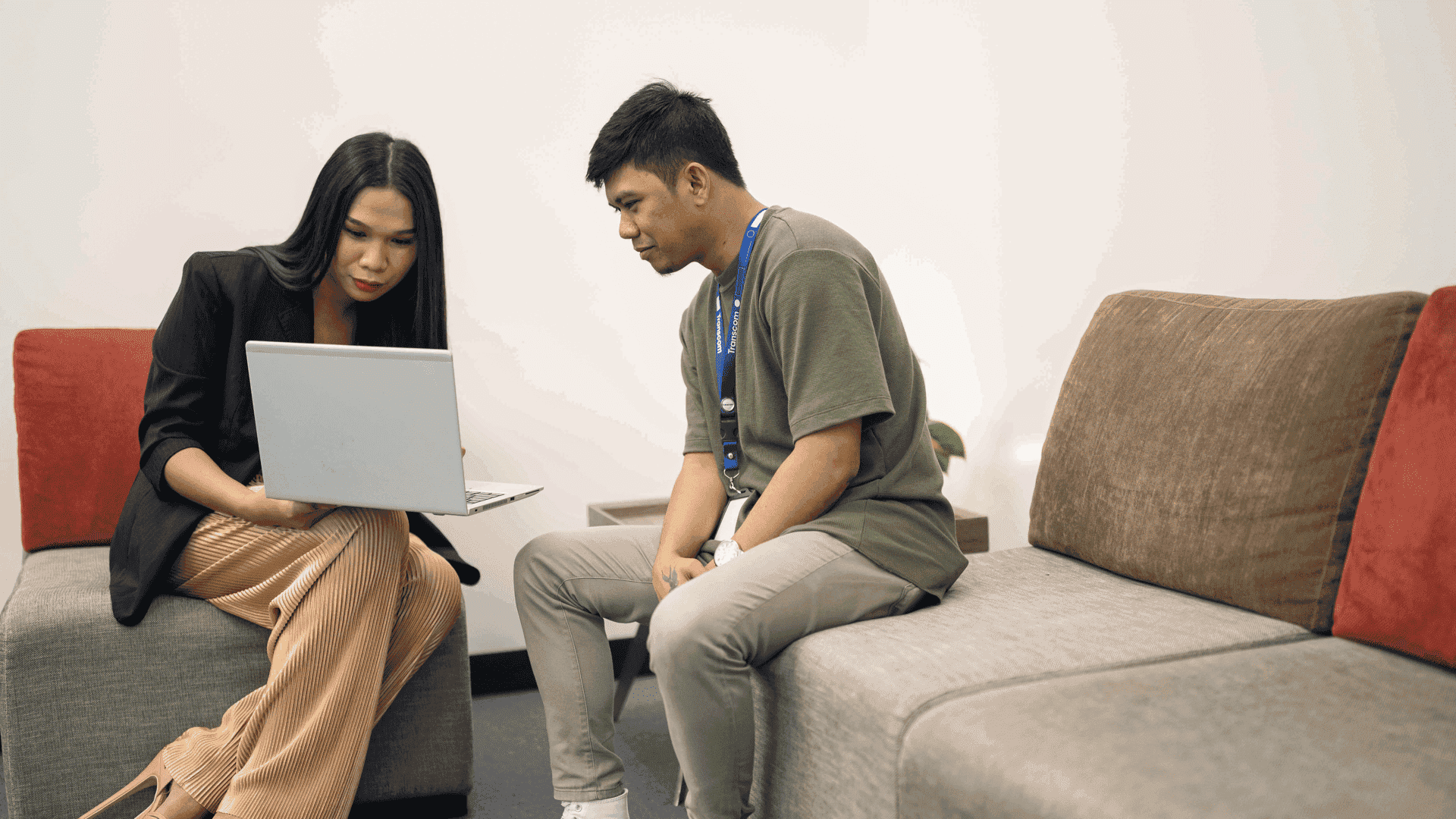
The running theme of our blogs has been growth and development. Fighting off stagnation. That’s why, when it comes to careers, the idea of lateral career moves can often seem counterintuitive. Why shift away from your current role when you could be working your way up? Isn’t that counterproductive? Aren’t you just basically starting from scratch all over again? The short answer is “no”. Let’s talk about lateral career moves and why they could be the best thing that you can do for your career.
A lateral career move is when an individual in an organization decides to switch roles or departments without seeking a promotion. This type of move can be advantageous for several reasons, such as building new skills and gaining experience and knowledge from other parts of the company. It also offers professional growth opportunities that may not be available in one’s current role. At Transcom, we want to empower our employees and give them the chance to explore their potential. To do that we have things like T:University which helps with learning new skills necessary for lateral moves, T:Gamification that takes learning new skills and places it in a fun context, and T:Perform for coaching and following your progress. It’s obvious why we encourage lateral career moves: they can help build strong professional relationships and provide a wide range of experiences that can help shape your personal development this in turn creates an atmosphere of progress.
Lateral career moves can provide a great opportunity for growth and development in your professional life. Moving laterally in your chosen field can open you up to new experiences, help you gain valuable skills, and create opportunities that wouldn’t be available if you stayed on the same path. But why should you consider lateral career moves? What do they offer that traditional job promotions don’t?
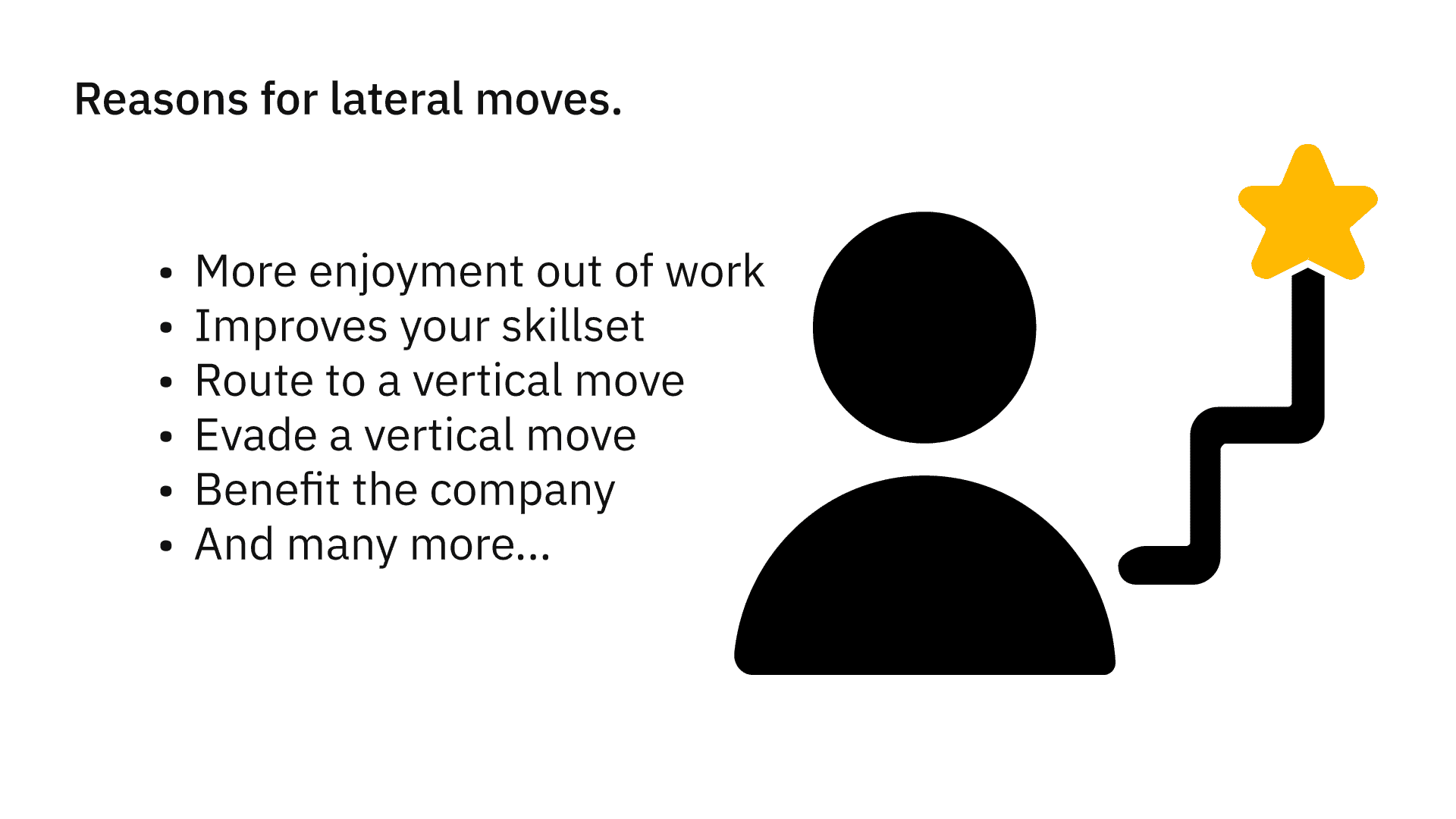
Lateral career moves offer new experiences and opportunities, allowing you to break out of the mundane routines of work. With a lateral move, you can try something different and gain a fresh perspective on your job. You may find that by changing roles or job responsibilities, you are more engaged and motivated.
This doesn’t have to be limited to just enjoyment through novelty but it could also mean that you made a lateral move to improve your work/life balance. By making a switch to a position better suited to your habits you can become happier and more productive.
Making lateral career moves can be an effective way to boost your professional skillset. Especially in a competitive job market, it is important to stand out from the crowd and show employers why you are the perfect fit for their team. Lateral career moves give you the opportunity to diversify your experience and open up new opportunities for growth.
By exploring different roles within the same industry, you can gain a better understanding of the wider context in which your job functions. This type of career move also allows you to develop broader skills that may not be within your current specialization. For example, if you are a software developer, taking on additional roles as a product manager or business analyst could give you an edge when it comes to problem-solving and decision-making.

Created at Thu Apr 02 2026
3 min read
AI is accelerating faster than enterprise operating models were designed to handle. In every organization, transformation is underway. Roadmaps are expanding, budgets are shifting, and expectations from boards and customers are rising. But acceleration without structure creates volatility - and customer experience is no exception to the rule. While technology introduces possibility, leadership determines whether that possibility becomes measurable value or a mere disruption.
Navigating this ten
By moving from one position to another within your company, you gain valuable experience and knowledge that can help you when it comes time for promotions. In addition, lateral career moves often result in increased responsibility, as well as greater exposure to different departments and teams. This gives you the opportunity to expand your network and build relationships with people across the organization.
When it comes to promotions, lateral career moves can give you an edge over other candidates. Because of the knowledge gained from experiencing different roles within the company, employers are more likely to recognize your skillset and determine that you are the right fit for a higher-level position. In addition, companies will often reward lateral career movers with higher salary offers and better benefits packages because they are confident in their ability to perform more complex tasks.
On the flip side, you may not want to complete a vertical move. Some people don’t see themselves out of creative and hands-on roles and in more managerial positions. We know where our strengths and weaknesses lie, and recognizing and being open about them leads to better cohesion and performance.
Not being interested in management does not have to be seen as a bad thing, it just means that you’re happy doing creative work and that you feel that that’s what you’re good at. This also doesn’t mean that you don’t want responsibility but that you recognize your skillset for what it is because, in the end, career growth is not only about titles, roles or promotions. It's about broadening your skills and pushing yourself to levels of mastery. Lateral career moves can serve as a great way to achieve that goal without taking on the added stressors and responsibilities involved in management roles.
We already talked about how diversity is the lead cause of improvement and innovation. Different backgrounds and skillsets combining into a whole more powerful than the sum of its parts.This means that lateral career moves can lead to more creative and innovative ideas for your organization.
By working in different roles, you may be exposed to new methods of approaching challenges or even discover solutions that could not have been achieved within your current role. Or you could be the key to unlocking a solution to a problem that has persisted for a long time because you bring a new way of thinking and working.

Created at Wed Apr 01 2026
6 min read
Development is no longer the hardest part of the gaming industry. After decades spent perfecting the art of building worlds, even challenger studios now have access to powerful engines, efficient collaboration pipelines, and global development teams that can consistently ship high-quality titles.
The greatest challenge gaming companies confront today - the one that separates noobs from pros? It’s all about what happens after launch: the moment players show up. That’s when the game changes, bec

Created at Fri Mar 27 2026
5 min read
Leaders’ most valuable insights don’t come from their titles. They come from lessons learnt along real professional journeys. That’s the wisdom behind our Leading Voices series charting the careers and challenges of the real pioneers behind the future of customer experience. And there couldn’t be a richer example than the story of Julie ‘Jam’ Barton. With more than 16 years of experience across both client and BPO environments, she now leads global training and communications for member servic