‘Transcom Chats’ is a series of interviews with Transcom staff on things and topics we’re passionate about. The aim is to bring forward, talk to, and highlight the people that make Transcom the brand you know and love.
Introduction.
In this edition, we have three guests continuing with the topic of sustainability. Talking about Transcom Bees we have Marijana Olbina, Victoria Padilla, and Frank Christian Kant.
Interview.
Tell us a little bit about yourself and what your role is.
Frank Christian Kant: I'm a part of Transcom since 2008, started my career as CSR, then from 2013 to 2019 I was a Quality Analyst and Coach. In summer 2019 I switched to Social Media Expert for Germany in the marketing department. Then I was an Employer Branding Specialist, Sr. Employee Experience Specialist and from April 2022 I'm luckily in the position of the Lead in the Employee Experience Team for the Central Cluster. Marijana Olbina: I have been a part of the amazing central cluster employee experience and HR Serbia teams since June last year. My role is the internal part of employer branding, which includes employee engagement, Transcom cares, Transcom listens & global wellness initiatives, internal communications, events, supporting and advising HR and business, and much more.Our team has such an important part in making a place of business a place their employees want to and like to be in, and designing a fantastic experience for each employee from day one. Victoria Padilla: I have been with the employee experience department since January 2022. My role is focused on Iberia (Spain and Portugal), but I collaborate with colleagues as much as possible. I am very happy and grateful to be part of my team.
What are Transcom Bees?
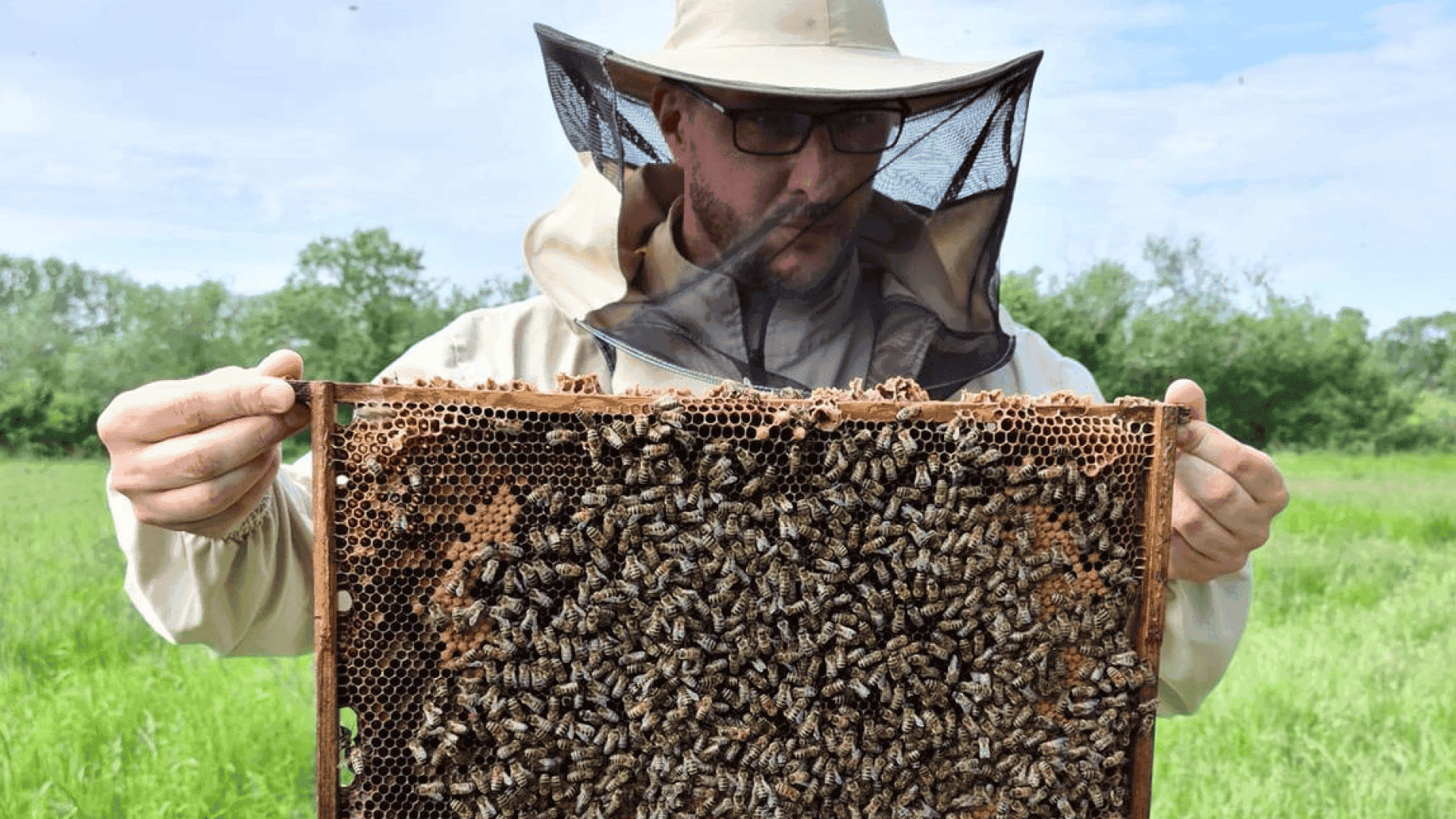
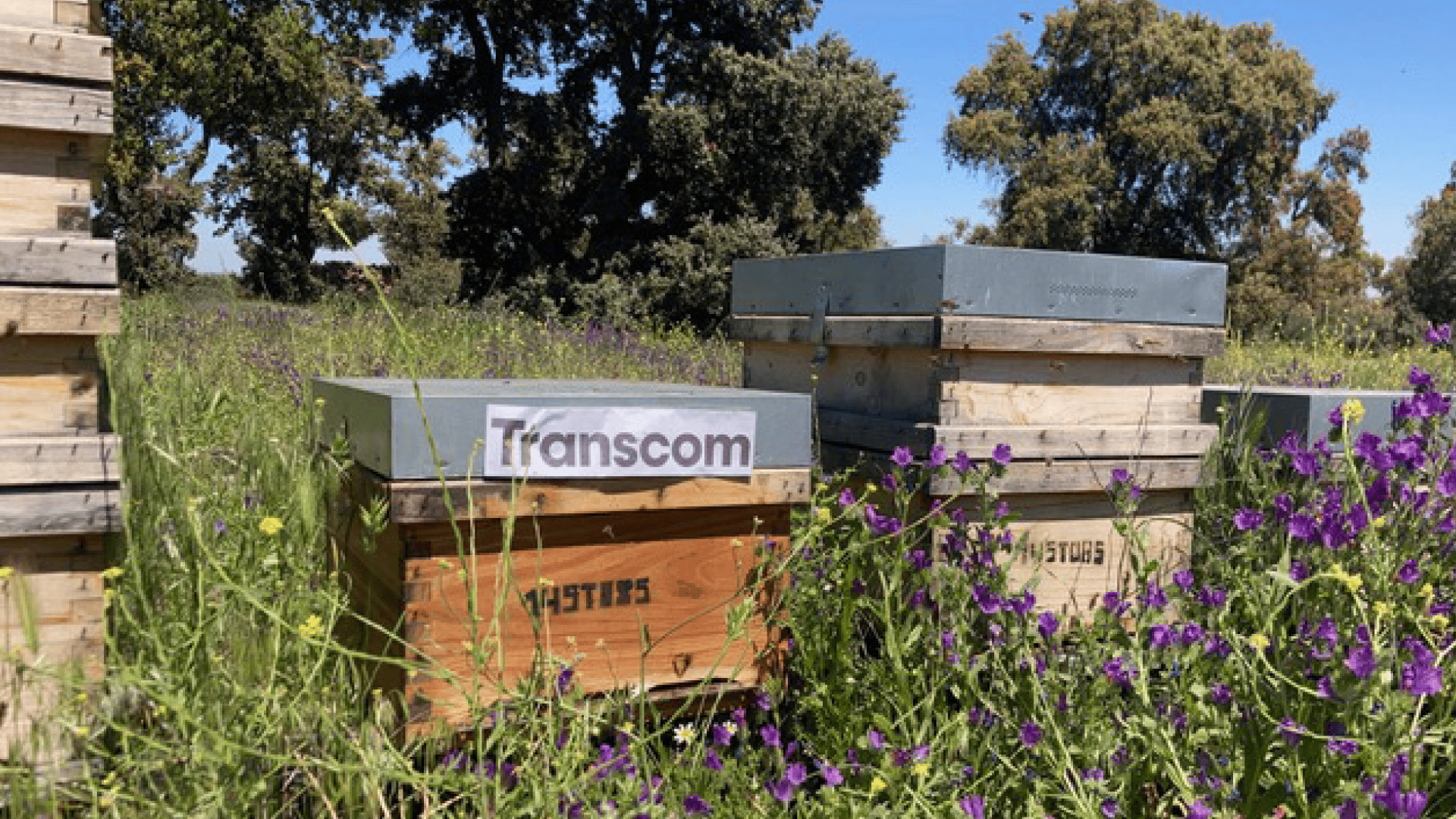
Frank: The Bee Project in Germany is a sponsoring of the cost for a beehive from a local beekeeper. We cover the costs for the bee hive for a year, now it is the third year already. We also receive some jars of honey from our bees for that and have the opportunity to purchase the honey at a discount. Our employees use that option very often.Marijana: Transcom Bees is an initiative which has a focus to support the Beekeeper associations and small beekeeping businesses in order to preserve bees and educate people about the importance of bees and sustainable beekeeping practice.Victoria: Transcom Bees is a project that started last year in different countries of the Central Cluster and Iberia. With this initiative, we help beekeepers, bees, and the environment. Thanks to this campaign, our employees know the importance of bees.

How did it start?
Frank: We spoke about that bee topic already in 2019 in one of our meetings, we brainstormed about some mascot for Transcom and a bee was one of the ideas. I remember some brainstorming also about having some of “our own bees” and that some other people in the team were also thinking about sponsoring bees.

Thanks for reading!
Read more
Transcom Staff
Created at Fri Oct 09 2026
10 min read
How to measure the ROI of customer experience investments: formulae, steps, and solutions.
Customer satisfaction might be key to long-term business success, but satisfying today’s CFOs and board members to secure the necessary investments takes hard financial evidence. Discover what CX ROI really means in financial terms and why it’s so critical to your bottom line. We break down the four-step framework you’ll need to measure it in practice - from establishing baselines and determining CX levers, to linking them to financial outcomes and calculating net returns. We’l
So we searched for a beekeeper that would like to cooperate with us, we found one in Rostock in Germany and we made a contract to cover the costs of a bee hive. After starting this, it was part of my social media strategy for Germany in 2020. We created a few posts for internal and for external usage to bring attention to the importance of bees for the world. Now we have the Bees in Spain, Poland, Germany, Serbia and hopefully soon in Bosnia, the Team is already working on that.
What is the purpose of Transcom Bees and why is it important?
Marijana: Transcom Serbia is supporting urban beekeeping through cooperation with the Belgrade beekeeping association. We found this to be the right answer for ecologically aware citizens and socially responsible companies. By recognizing the importance of the bee in the ecosystem, its vulnerability, and by deciding to take care of a beehive, we contribute, even if it is just a little bit, to the preservation of the biodiversity of plants, bees and nature.
On the other hand, we always keep in mind that the bee is the most important insect, "responsible" for pollinating an incredible 85% of flowering plants, and it is natural that the development of urban beekeeping was also linked to the movement of local food producers. Which is today more and more dedicated to organic production and sustainable development.
The fact that every third bite of food was actually produced by bees speaks vividly about the invaluable role of bees as pollinators of various plant species that people use in their diet. However, it was the disappearance of bees in the last ten years that contributed to the fact that more and more people in cities are engaged in beekeeping.
What do we do with honey?
Frank: In Germany every employee that works with us for a year receives a jar of Transcom branded honey on this jubilee, we also give it away as a gift for guests and clients and sell it to every employee at a good price from the beekeeper.
Marijana: Our first honey is coming this summer, and we are excited about this fact. But, what we keep in mind is the importance of responsible and sustainable honey extraction. The amount of honey can differ, and it is important for us that the bees are handled carefully, with knowledge and with respect. When we do find out the amount of honey the bees donated to us, we will certainly strive to do something as noble with it for someone else.
Victoria: In Spain, we provide information about the beekeeping company. We carry out a raffle among all employees so that they can taste the honey and if they wish to buy it. In this way, we help the company both with the sponsorship and with the buying of each product.
What are the future plans for Transcom Bees and what can people do to help?
Frank: I think an ongoing awareness campaign would be great for employees and everyone else. Giving away flower seeds to employees to help bees in nature would also be a great idea to do something good for the environment.
Marijana: In Serbia, we are working on education awareness about bees, like our workshop in the apiary on World Bee day, led by the Belgrade beekeeper association. We have our Green team who is always involved in these activities, but the goal is to include as many Transcom colleagues as possible.
We hope to be able to take care of more hives next year, and to include more employees into this process by providing them with a 3 month beekeeping course in order to be able to help take care of Transcom hives. It would be amazing to have a Transcom beekeeping club.
Victoria: In Spain, we conduct several awareness campaigns for all employees to care for and respect nature. Any information is always good to help the environment.
Will DeepSeek turbocharge the adoption of AI for CX?
DeepSeek was only founded in 2023. The company is based in Hangzhou, an important port city in Eastern China that has been a strategic hub along the Silk Roads for thousands of years. DeepSeek has been building large language models (LLMs) since the company was created, but the[ 2025 release of their R1 LLM challenged](https://www.techtarget.com/whatis/feature/
India holds tomorrow’s CX advantage - and it’s not volume. Here’s how to harness it.
An automated system has answered a customer’s question. The answer is accurate in itself, but it has missed the true reason for the contact. The customer has to explain the situation again, this time to human support. The support representative resolves the issue, but notices something else: the same misunderstanding keeps appearing across multiple customer journeys. When a mistake repeats at scale, who owns the lesson? And what should a global enterprise expect from a CX partner whose job inclu