Ecommerce customer journey: how to improve yours
Published on Thu May 15 2025
Updated on Fri Aug 08 2025
10 minute read
We have a little quiz for you. What do we call the process that begins from the moment a potential customer finds out about your ecommerce business, and follows them all the way through to post-purchase engagement and advocacy? Which process includes every single step of the experience, and can take your brand to the next level when it comes to loyalty and revenue? And which process is crucial to you understanding needs so that you can anticipate them and provide the best service possible?
The answer to all of these questions is the same: the ecommerce customer journey.
What is the ecommerce customer journey?
It’s a process that begins from the moment a potential buyer finds out about your business and follows them through to post-purchase engagement and loyalty. The ecommerce user journey includes all of the steps taken while interacting with your brand, from initial discovery to purchase and beyond.
It is important for businesses to be aware of their customers’ journey in order to understand their needs and expectations, and create a better experience. Improving yours can help you increase conversions, boost sales, and develop stronger relationships. And as global ecommerce sales are project to reach $6.3 trillion in 2023 (and $8.1 trillion by 2026), there is profit to be made in this area, and fast.
Why is it so important?
When someone purchases products online, they’re making an emotional investment. They want to be sure that their money is going towards a good product and that the company they are buying from will provide them with a positive experience.
The ecommerce customer journey can help you identify areas of friction or dissatisfaction in your process, so you can take steps to address them. By understanding where customers are in their experience, you can provide a more tailored pathway for everyone, which helps to increase sales and build loyalty.
The boom.
The rise of ecommerce has been unprecedented. Over the last decade, the global industry has grown exponentially. This growth is driven in part by technological advancements, making it easier than ever before to shop online from the comfort of your own home.
Alongside this, businesses have adopted new strategies to better serve customers, such as personalization and improved service. This has helped to make ecommerce an increasingly popular and efficient way of shopping, with more people than ever relying on it to purchase everyday items. As a result, the development of a successful ecommerce customer journey is becoming essential for any business looking to stay ahead in this increasingly competitive industry.
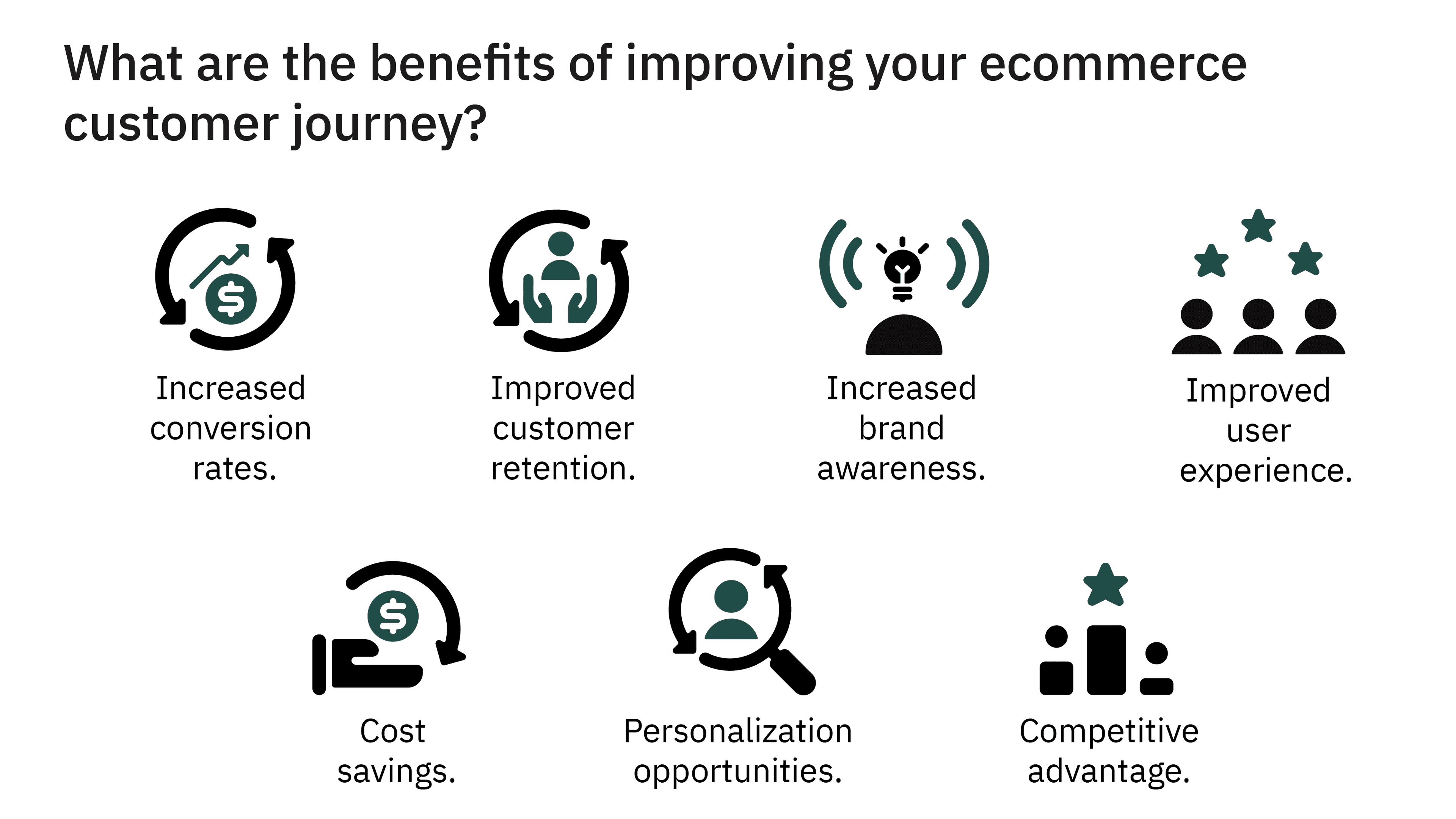
The benefits of improving your ecommerce customer journey.
- Increased conversion rates. By creating a smooth and intuitive journey, businesses can increase the likelihood of conversion. This could lead to higher sales and profits.
- Improved retention. A great ecommerce customer journey encourages people to return and shop again, resulting in improved retention and loyalty.
- Increased brand awareness. Businesses can increase their brand awareness, leading to increased reach and new buyers.
- Personalization opportunities. By understanding needs and preferences, you can provide tailored offers that are more likely to convert.
- Cost savings. An improved ecommerce customer journey can lead to fewer service queries, resulting in cost savings.
- Improved user experience. By understanding how their website or app is interacted with, brands can make improvements to design, layout and usability.
Customer touchpoints.
Touchpoints are the points of contact between a business and its users. They play an important role in creating positive experiences, as they provide an opportunity to engage and build relationships. Touchpoints occur at every stage of the ecommerce customer journey, from discovering the product all the way through advocacy and beyond.
Whether it’s website content, service interactions, emails, or advertisements, by focusing on creating a great impression throughout these touchpoints, you can nurture lasting relationships and drive loyalty to your business.
Examples of touchpoints include:
- Website content. This is how people first learn about your business and products. Make sure you provide clear, interesting, and informative website content that can give potential converts an idea of what makes you unique.
- Customer service interactions. From answering questions to resolving complaints, providing excellent support is essential for building relationships.
- Emails. Email is a great way to keep your base informed on new products and upcoming promotions, while also strengthening the relationship with them.
- Ads. Advertisements help build brand awareness and can be used to encourage both current and potential buyers to engage with your business.
Journey mapping.
Mapping the ecommerce user journey is all about efficiency and optimization. With more data, a clear overview of all touchpoints and processes, and a tailored way of working for each interaction, you can better see what people are getting from your brand at every stage and how they’re responding to your service.
To build an ecommerce user journey map, you should start by gathering data on how customers interact with your website or app. This could include tracking user behavior through analytics tools, conducting surveys and interviews, and observing interactions in support channels. Once you have collected this data, you should analyze it to gain insights into needs and preferences.
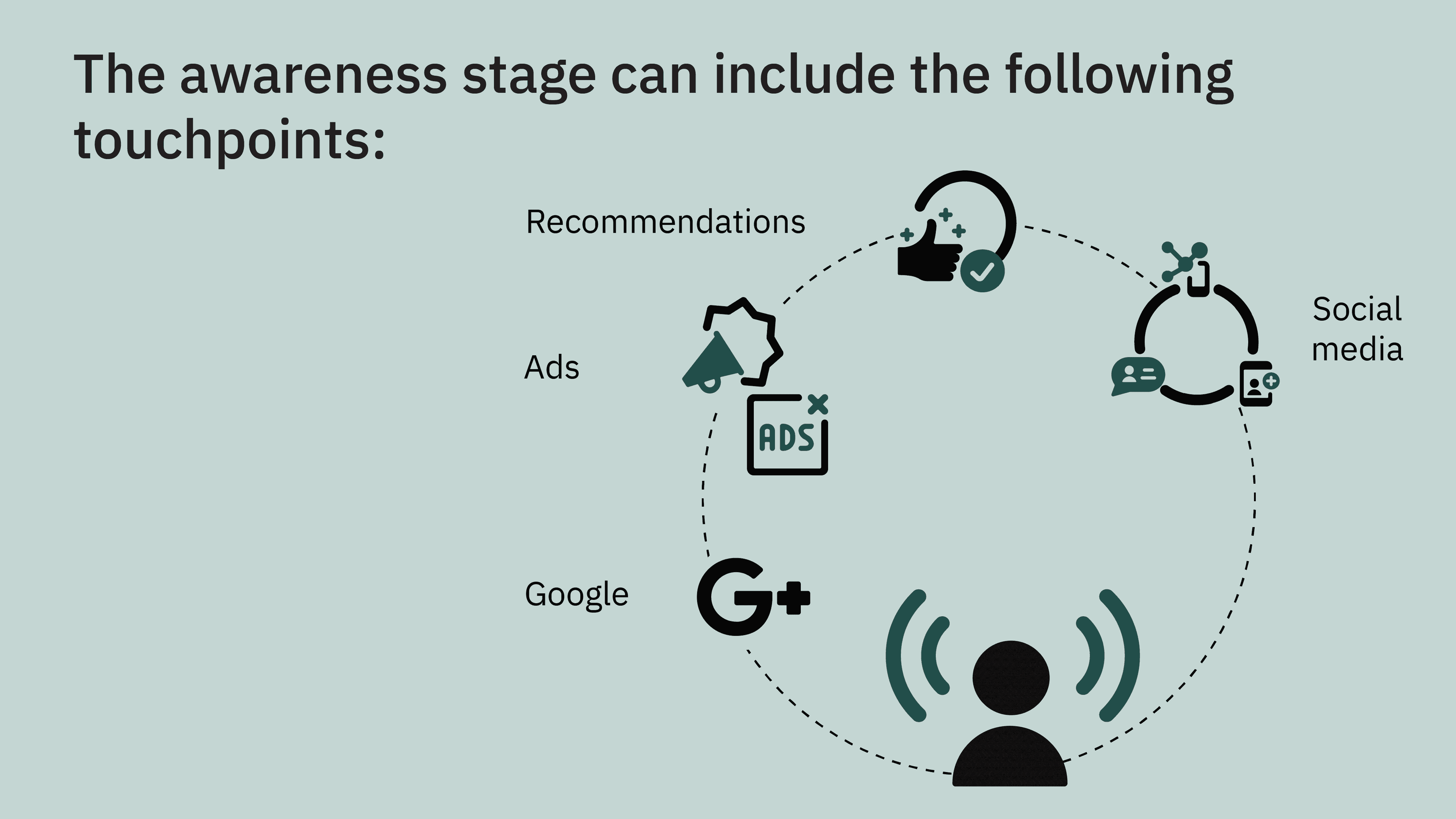
Once you have a better understanding, you can create a map that outlines the stages. This could include the initial awareness stage, consideration, decision, buying experience, loyalty, and repeat purchase stages, outlined above. Your map should include details such as key touchpoints, customer motivations, and any potential points of friction.
Creating an ecommerce customer journey map is a great way to gain insights into your customers’ needs and preferences, as well as identify opportunities for improvement. With this information, you can create a more personalized experience that encourages conversion and loyalty.
Finally, it’s important to monitor this on an ongoing basis in order to track any changes over time. Regularly reviewing analytics data and feedback will help you identify areas of improvement and ensure you’re meeting needs. With the right approach, you can create an optimized flow that helps your business stand out from the competition.
Process mapping.
This involves creating a visual representation of each step, from discovery to post-purchase engagement. By mapping out each stage and noting any potential areas of friction or dissatisfaction, businesses can gain valuable insight into where improvements could be made. Process mapping can also help businesses spot opportunities for personalization and provide better service, helping to create a more positive and engaging experience. Ultimately, this could lead to higher conversion rates and increased sales.
Optimization.
Optimizing the ecommerce user journey is important for a number of reasons. It can help businesses reduce friction, leading to increased sales and conversion rates. A streamlined user journey can also save time and money by cutting down on manual tasks such as support and training. Brands struggle with optimizing their CX, with as the reason why.
What are the stages of the ecommerce user journey?
Just like in any great story, there tends to be a beginning, middle, and end for every individual who participates in it. From the moment they set out to discover something for themselves, all the way through to becoming an avid fan of a product or service, there are a series of key steps, each of which can be mapped, analyzed, tailored, and optimized, all to provide the best possible experience from start to finish.
Awareness.
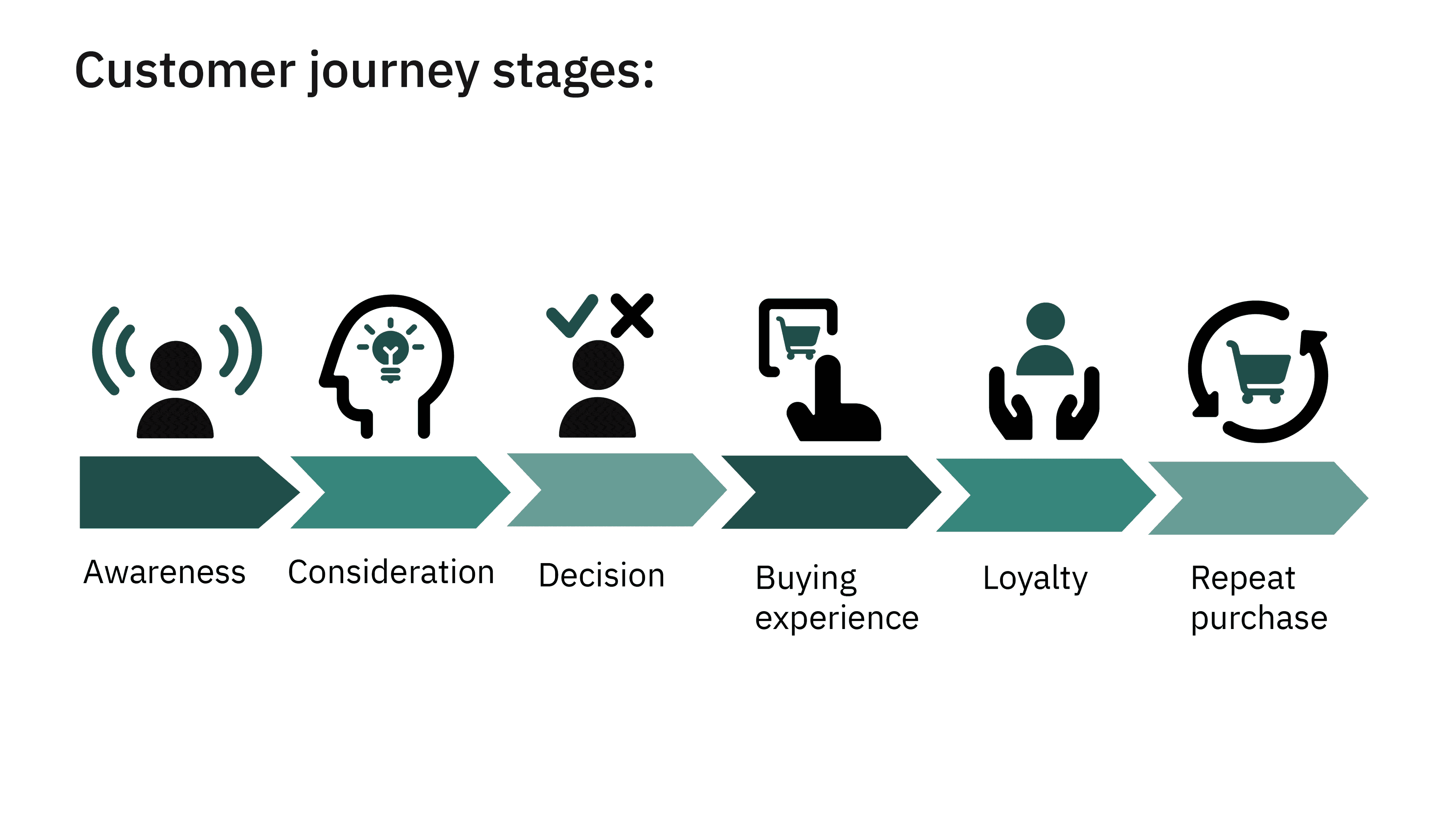
This is the initial stage in which customers become aware of a product or service. They may come across it through online advertising, search engines, social media or other channels. At this point, they haven’t yet discovered your brand and its values, and they likely have never actually purchased a product or a service from you.
During the Awareness phase, reach, targeting, and influence is crucial. Trying to make it so that when your users need something you offer, you’re the first though that they have. And considering that 92% of people don't go past the first page in Google, this is a surefire way to reach your audience. A robust digital marketing strategy, coupled with knowing who you’re trying to attract and an effective brand presence, can be the difference between you and your competitors.
Improving the awareness stage of the ecommerce user journey is essential for businesses that want to increase acquisition.
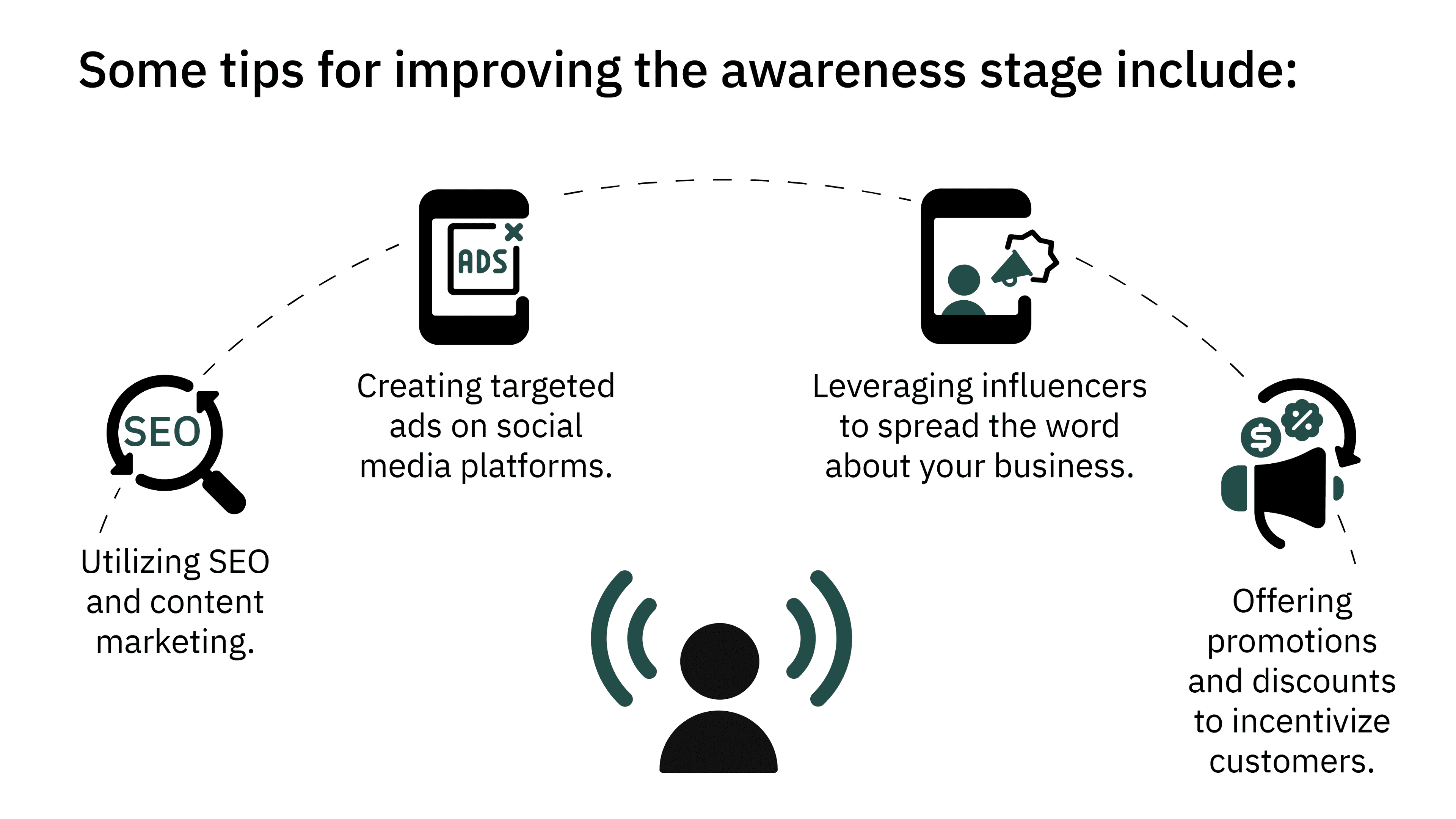
Some tips for improving this stage include:
- Utilizing SEO and content marketing to optimize your website for search engines.
- Creating targeted ads on social media platforms such as Facebook and Instagram.
- Leveraging influencers to spread the word about your business.
- Offering promotions and discounts as incentives.
Consideration.
Now a customer is aware of your brand, they will begin to consider whether they should purchase the product or service. They may research online reviews and compare it to similar offerings from competitors. They may look into your business’ values, ethics, and how easy it is to get what they need - flexible payment and delivery options, for example.
Get online.
Throughout all of these stages, chances are that most interactions with will happen via mobile, an app, on a website, or some other digital channel. That’s why it’s vital that your online presence showcases a clear and smooth path from each stage to the next. A great example is website optimization.
Say your website loads quickly, with no errors or issues, and the content clearly states what your offers and prices are. Every page is easy to navigate to, and there are even FAQs or support teams ready to help answer any questions they may have. That kind of website would definitely make someone more comfortable with making a purchase - when made so easy, so is the choice.
On the other hand, if your site loads slowly, is unnecessarily complex, has too many forms or redirects and a lack of information, it doesn’t make for an appealing start to the ecommerce customer journey. Your visitors might opt to close the tab or bounce to something else, which means a missed opportunity for you, empty traffic, and a dissatisfied visitor who is unlikely to search you out again. A poor website may also cause concerns in terms of security and efficiency, as a visitor may feel that if the interface is lacking, so will the brand’s service and offering.
That’s why an excellent and refined online presence is key, both in website design and UI, as well as any apps, offers, email marketing, payment options, or other touchpoints with your client.