How to improve customer experience in a call center.

Customer experience,
customer service,
call center,
Published on Thu May 15 2025
Updated on Fri Aug 08 2025
7 minute read
We talk a lot about how to improve customer experience and why it’s so vital for any business looking to grow and maintain a loyal base. That’s why customer experience is one of the top priorities for brands this year. Companies that prioritize CX are more likely to retain their customers and increase their sales. In fact, research by American Express has shown that 86% of customers are willing to spend more if they know they’ll get a better experience. Which makes it a key factor in customer loyalty and satisfaction, and something every CX operation needs to put first. 
What is customer experience?
How can improving customer experience in a call center impact your business?
What factors can negatively impact customer experience?
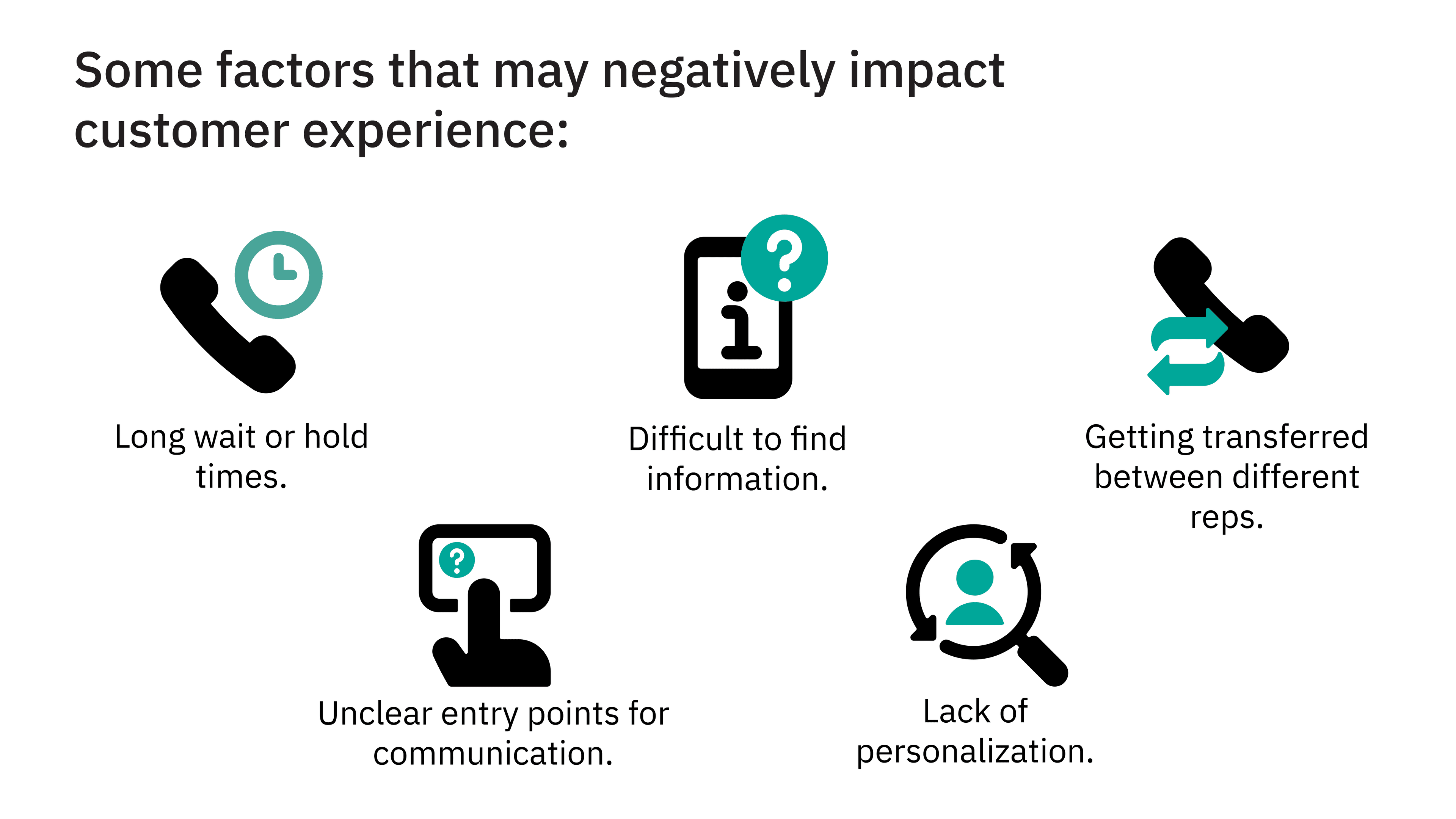
Other key factors.
- Inadequate staff training: If staff are not properly trained in customer service, they may not have the skills necessary to provide an exceptional CX.
- Unclear communication or unprofessionalism: Confusing, unclear, or unprofessional communication can lead to misunderstandings, which create difficult situations to resolve for both the customer and your support teams.
- Unhelpful technology: If the technology used by a company is difficult to use or slow, it can cause delays and frustration, leading to a negative experience.
- Unanswered complaints or insufficient information: If complaints are ignored or not addressed properly, theyre less likely to come back and ask again, which is when they may switch to a competitor.
- Disorganized processes: Poorly organized processes or systems can lead to delays and frustrations, resulting in a negative CX.
- Lack of follow-up: If customers do not receive follow-up or updates on their inquiries, it can create a negative CX.
How to improve customer experience - in a few simple steps.
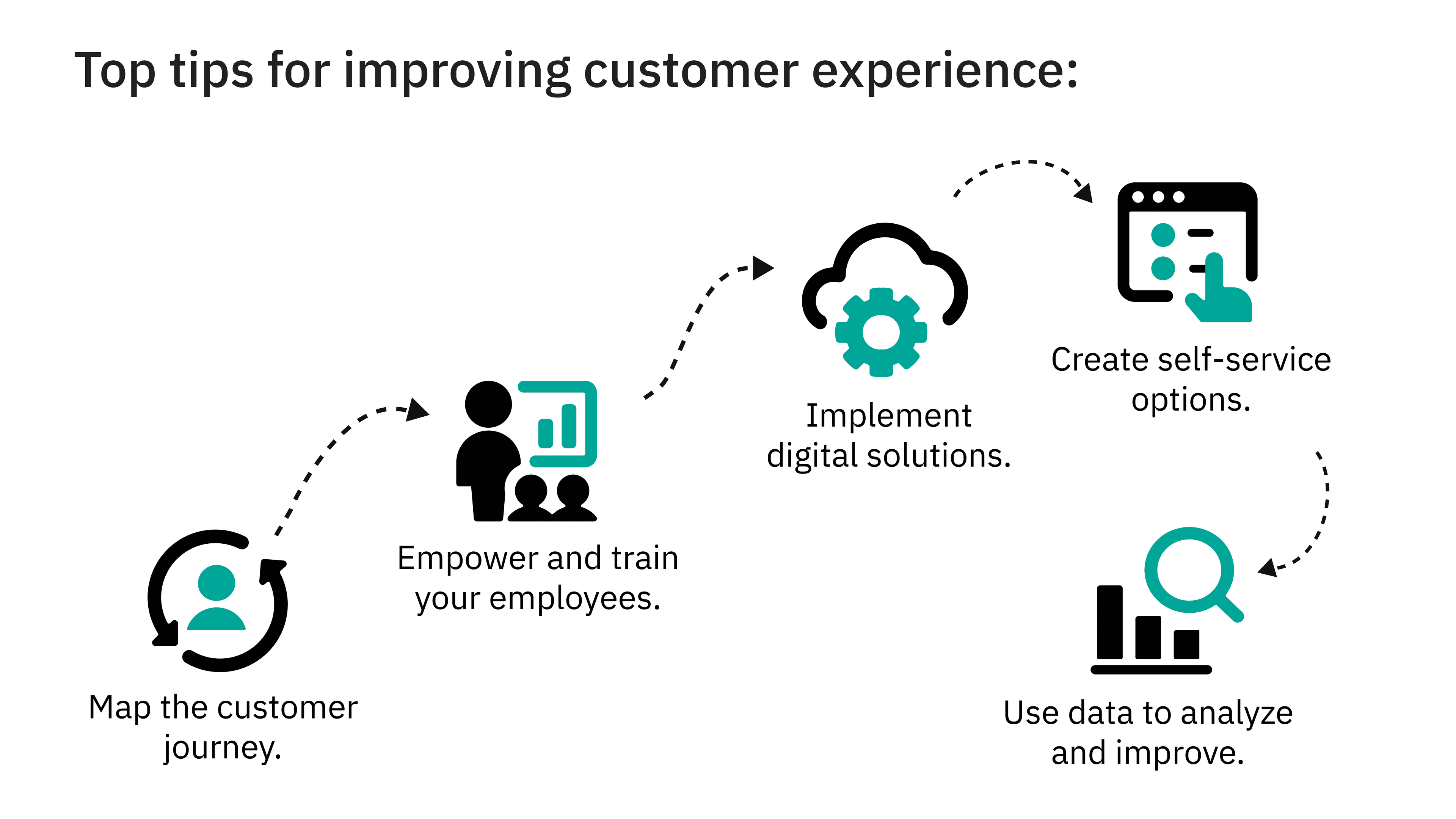
Create a customer journey map.
Knowing where to start is always the tricky part. And to know that means data, data, data. Gathering as much information as you can about your customers needs, taking the time to analyze it, such as with Transcom’s CX Advisory team, will empower you to create a map of the CX journey and determine where you can improve.
With this information, you can build strategies, training schemes, and even implement selected technologies to make the most of your brand’s customer support and use it to take your business to the next level.
Empower your teams.
First, ensure your teams are well-trained. It's important that agents understand the products and services offered, as well as how to effectively communicate with customers. Companies should also invest in quality customer service training programs to ensure staff are equipped with the necessary skills to offer exceptional CX.
By upskilling your employees, you can prepare them for how to deal with frustrated customers, upsell your products or services, and leave happy, loyal consumers on the other end of the phone or chat. This all goes hand in hand with a healthy company culture, strong leadership, and making sure your teams are well taken care of, so they can perform at their best.
Define clear objectives.
Make sure you define objectives for each call for how to improve customer experience. Your teams should know exactly what’s expected of them and how they can contribute to improving customer experience for the brand. And on the other side, customers should be informed of what will happen during their call and what the expected outcome is so they understand what to expect.
By creating a clear vision, which is based on knowing your audience and what their expectations are, you can more easily adapt your strategies to achieve more, and better.
Go omni.
How can data improve your customer experience?
- Analyzing feedback: By collecting and analyzing customer feedback, businesses can gain insight into what they need and how their CX can be improved.
- A/B testing: A/B testing can be used to compare different versions of a product or service to see which one is preferred, allowing businesses to make data-driven decisions.
- Measuring customer satisfaction: Businesses can measure satisfaction to identify areas that could be improved, as well as track progress over time.
- Analyzing sentiment: By analyzing sentiment and behavior, brands can gain insight into how customers interact with their products and services, allowing them to tailor their CX accordingly.
- Tracking complaints: Tracking complaints can provide insight into areas where improvements may be needed.
Read more
Created at Fri Oct 09 2026
10 min read
How to measure the ROI of customer experience investments: formulae, steps, and solutions.
Customer satisfaction might be key to long-term business success, but satisfying today’s CFOs and board members to secure the necessary investments takes hard financial evidence. Discover what CX ROI really means in financial terms and why it’s so critical to your bottom line. We break down the four-step framework you’ll need to measure it in practice - from establishing baselines and determining CX levers, to linking them to financial outcomes and calculating net returns. We’l