How to manage peaks in customer service?

peak management,
Published on Thu May 15 2025
Updated on Fri Aug 08 2025
9 minute read
Becoming a pro at handling peaks in customer service can seem like a daunting task for even the most seasoned professionals. In customer service, this is often the be-all-end-all of ensuring brand loyalty and creating a positive awareness of your business. When times are busy, your consumers still want to feel taken care of - it’s your responsibility to do whatever you can to make sure that’s the case.
A brief recap.
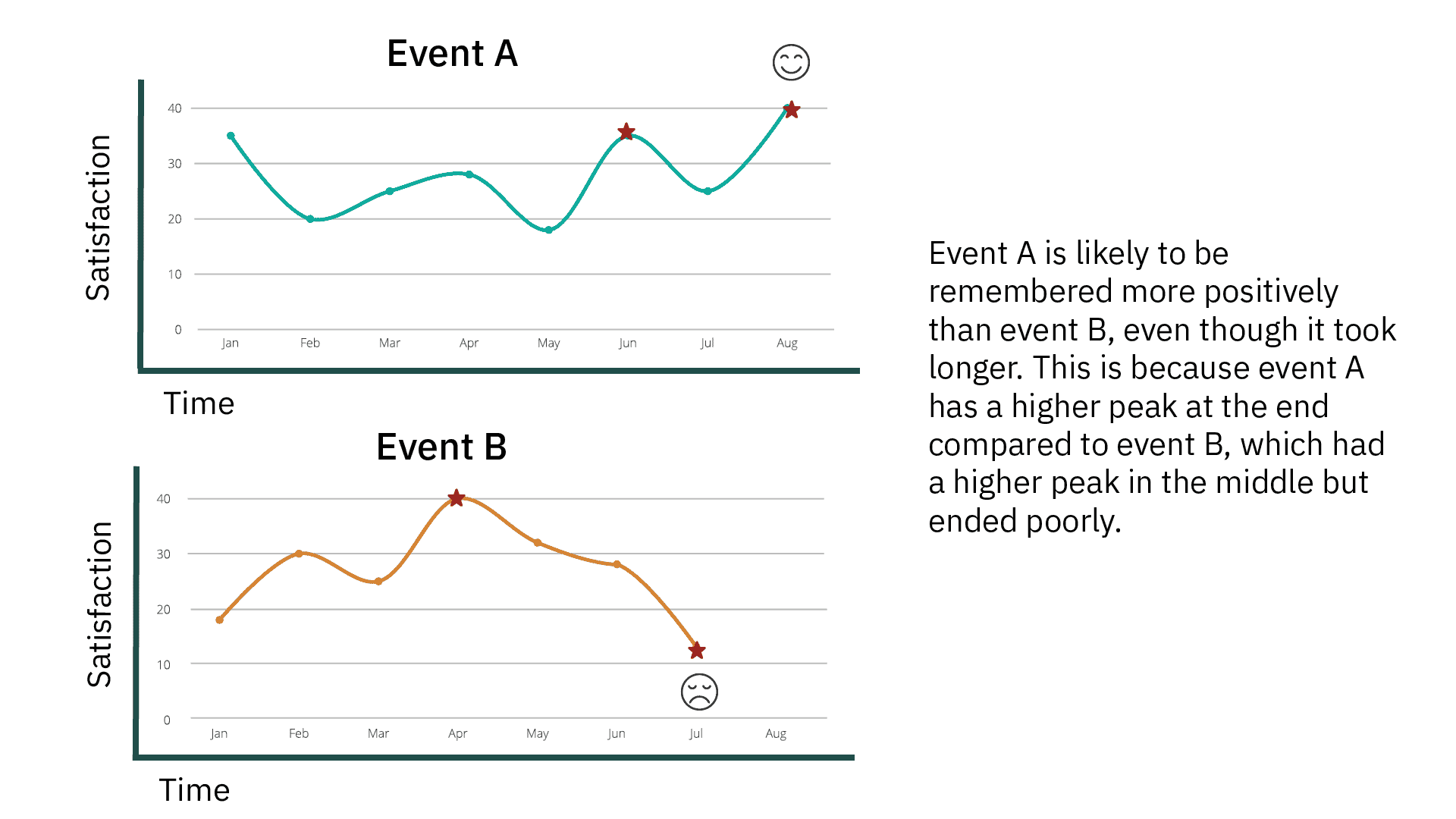
What is the peak-end rule?
What are the top strategies for managing peaks in customer service?
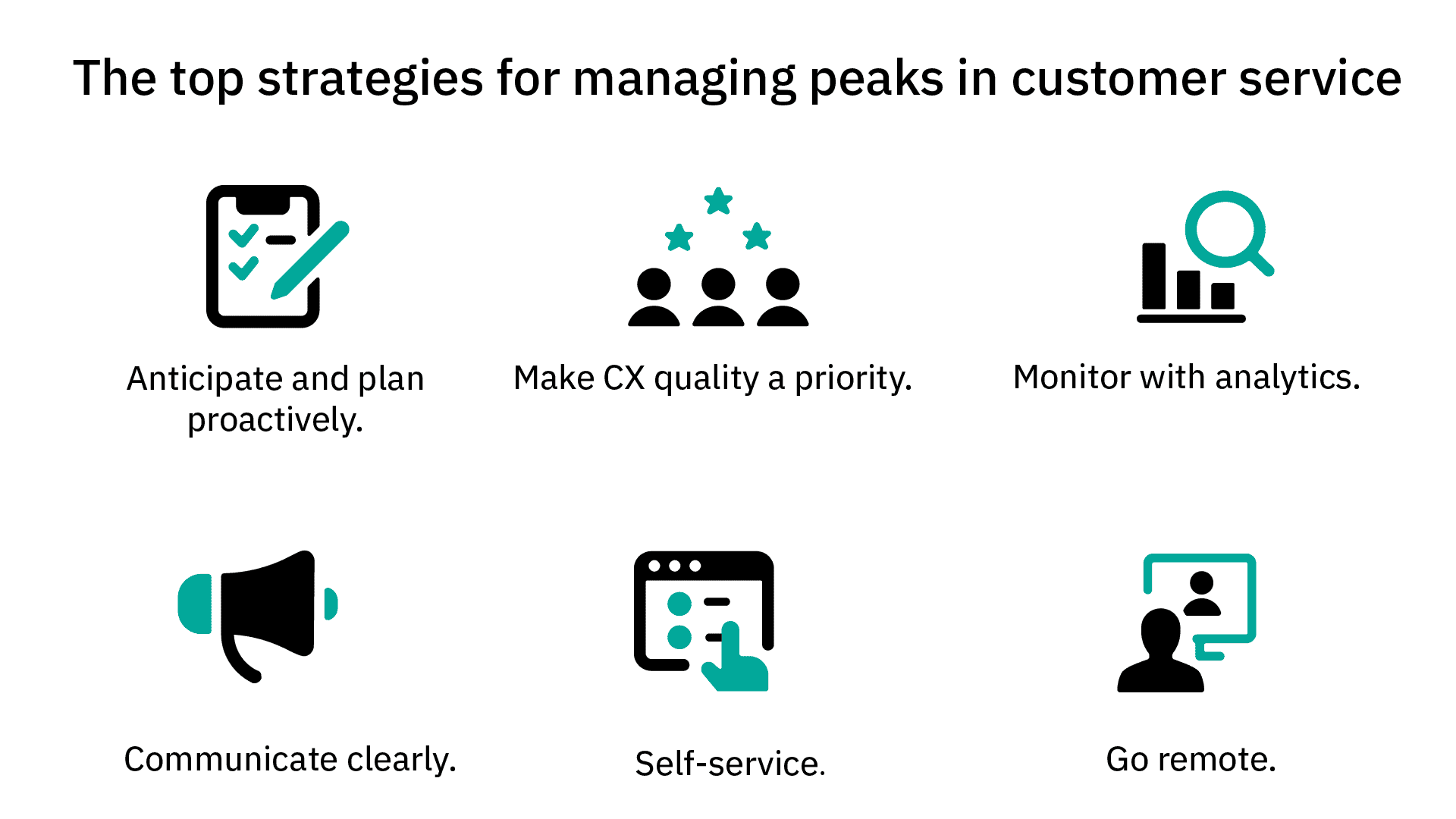
Anticipate and plan proactively.
Companies should anticipate peaks in customer service in advance and create a plan to manage them. Having a plan in place can help avoid stressful situations, panicked decisions, and frustrated callers and team members, because everyone is aware of how to approach the situation. Using historical data, you can also predict when the greatest volume increases will come. For example, if your company launches new products every holiday season, your CX team should begin preparing for the added volume of inquiries before the rush begins.
Make CX quality a priority.
When organizations focus on providing high quality customer service even during volume surges, they leave callers even happier than during periods of normal strain. Though expectations have risen in recent years, and closeness with brands is paramount, consumers appreciate when they receive thoughtful, helpful, and caring solutions to their issues, especially when they are pressed for time or in a crisis situation.
Monitor with analytics.
Analytics tools can help businesses identify areas of improvement and adjust strategies accordingly. By taking advantage of these tools and historical data, you can better understand consumer behaviors and patterns, and learn how to manage them more effectively. Tools such as Transcom’s business intelligence dashboards can provide real time data and insights upon which you can make data-driven decisions.
Communicate clearly.
People like to know what’s going on, even if the news isn’t great or if they’re asked to wait a little longer for a resolution. By communicating with customers during more intense periods, businesses can ensure their consumers understand any changes in service policies or processes. This could include informing them of increased wait times and providing alternative ways to contact customer service representatives. It’s also key to communicate well internally with your team to avoid stress and overload of work during peaks in customer service.
The importance of good training.
Why is remote the future?
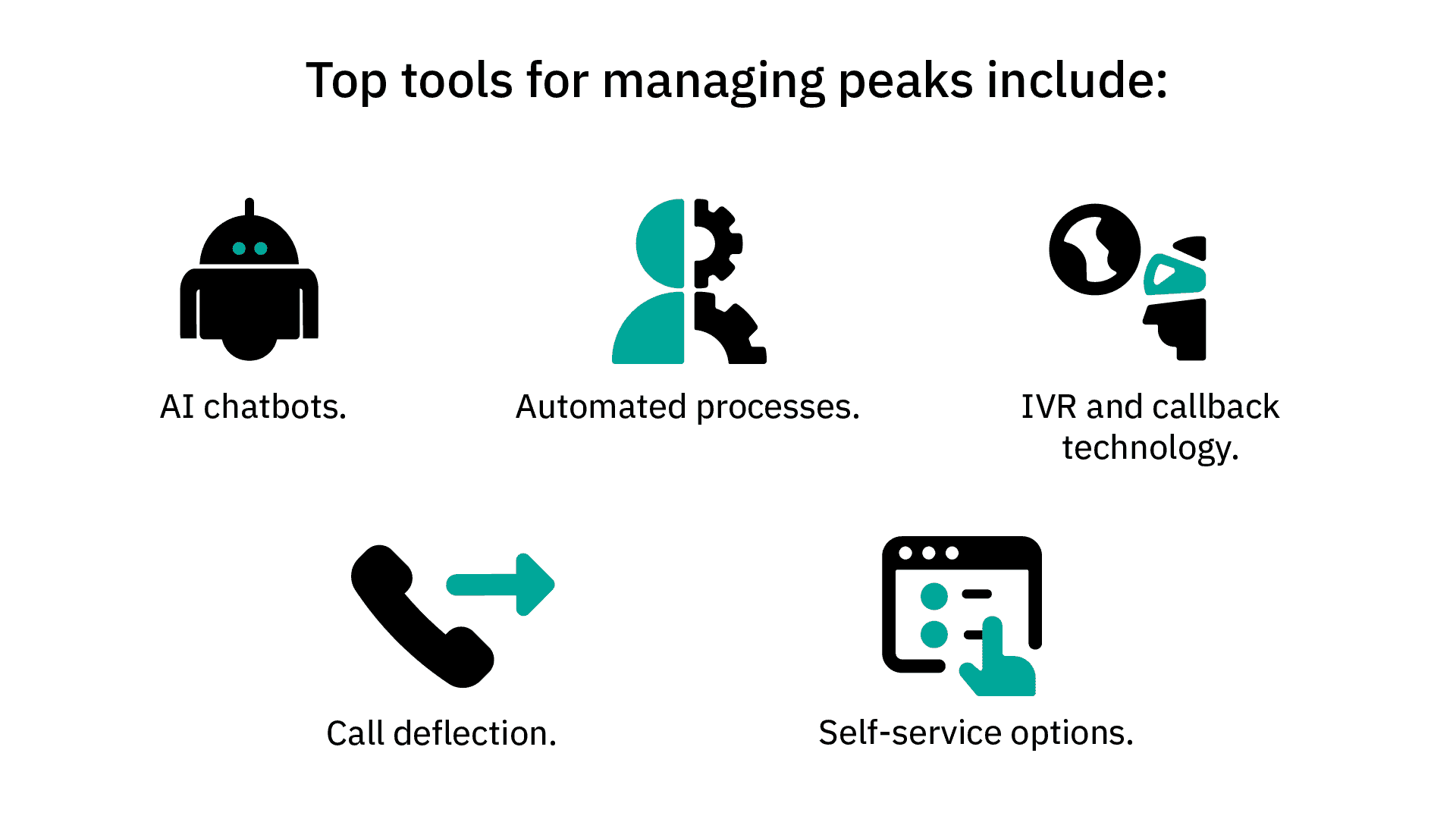
Technologies to consider.
Read more
Created at Fri Oct 09 2026
10 min read
How to measure the ROI of customer experience investments: formulae, steps, and solutions.
Customer satisfaction might be key to long-term business success, but satisfying today’s CFOs and board members to secure the necessary investments takes hard financial evidence. Discover what CX ROI really means in financial terms and why it’s so critical to your bottom line. We break down the four-step framework you’ll need to measure it in practice - from establishing baselines and determining CX levers, to linking them to financial outcomes and calculating net returns. We’l