inclusion and diversity,
DEI,
Published on Thu May 15 2025
Updated on Thu Jul 10 2025
6 minute read
Finding the right workplace is a crucial step in building a fulfilling career. But for individuals with disabilities, the search can be even more challenging. Discrimination and a lack of accessibility can create significant barriers to employment. This article, part of our Fighting prejudice series, equips you with the knowledge to identify companies that prioritize inclusion and offer a disability-friendly workplace. We'll explore key indicators, from physical accessibility to company culture, to help you find a workplace where you can thrive.
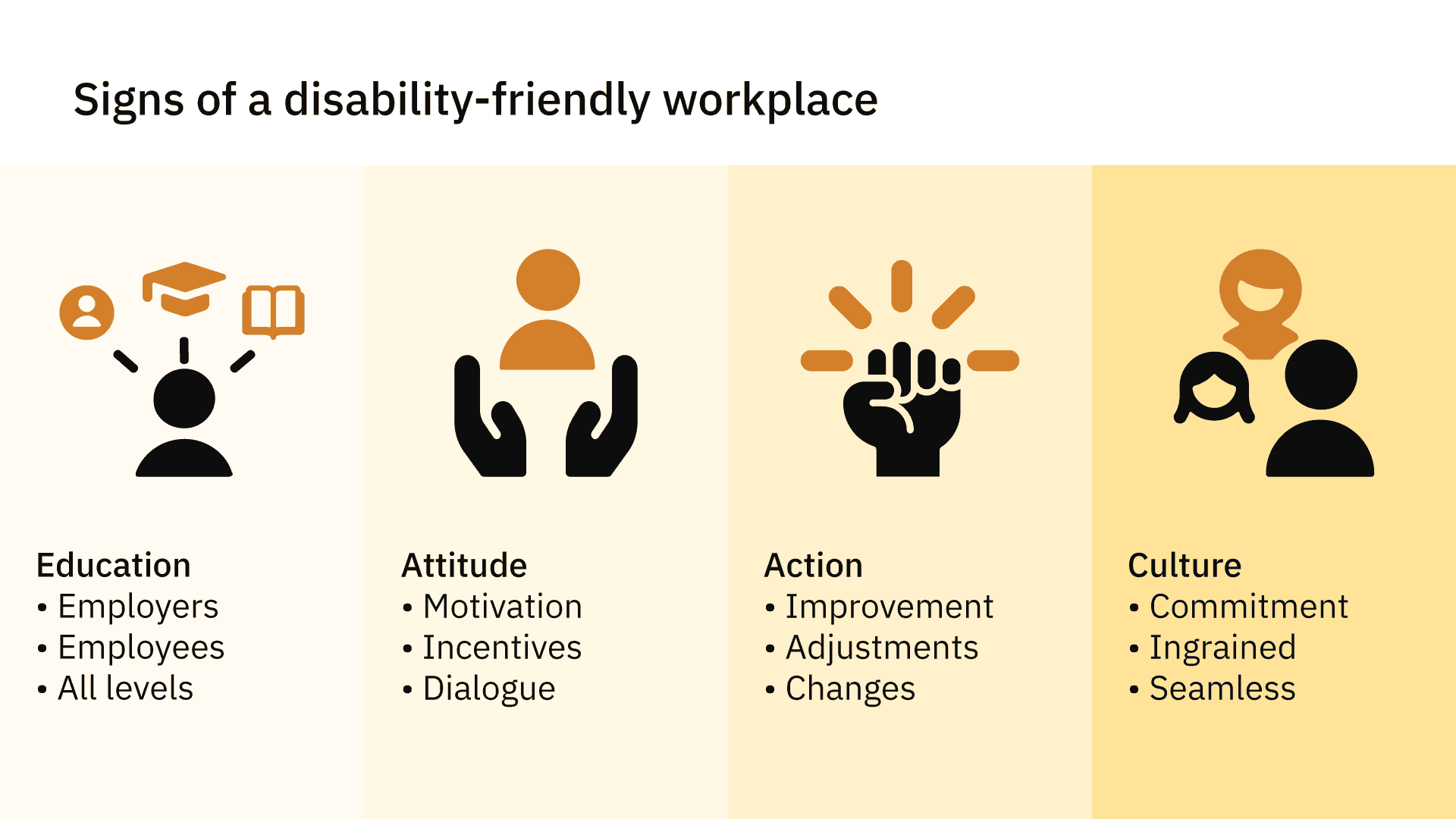
This sentiment is becoming a running theme in our articles and that is, of course, education. An employer that educates themselves as well as their employees is one that is acutely aware of the needs of those around them and those who might yet come into the circle. This proactive approach signals a willingness to invest in a culture of inclusion, where diversity is celebrated and differences are embraced as strengths. Companies that champion ongoing education demonstrate a commitment to creating a workplace where everyone has the opportunity to excel.
Education takes many forms in a disability-friendly workplace. Beyond the basics of legal compliance, employers can host workshops on disability etiquette, sensitivity training to address unconscious biases, and open forums for employees to share their experiences. By fostering a culture of learning, companies break down barriers caused by misinformation and fear, replacing them with understanding and acceptance. An investment in education sends a powerful message: this workplace values the contributions of all employees, regardless of ability. It creates an environment where individuals with disabilities are not just tolerated, but actively welcomed and encouraged to reach their full potential.
As always, education is just the start, never the end of inclusion efforts. You want an employer that actively motivates the right attitude. Sure, workshops can raise awareness, but a truly disability-friendly workplace goes beyond. Look for companies that create opportunities for employees to champion inclusivity.

Created at Mon Aug 10 2026
10 min read
Cutting costs by 40% to 70%, achieving 24/7 service coverage, and accessing a vast global talent pool of skilled workers are just a few reasons why offshore business process outsourcing (BPO) could be your company’s next competitive advantage. Strategic benefits ranging from enterprise-grade tech to airtight security - all financed flexibility without steep upfront investments - are driving businesses of every scale to delegate more non-core functions to overseas providers. But doing
This could involve sponsoring employee resource groups for people with disabilities, or even encouraging participation in volunteer initiatives that support disability rights. By spurring on their employees, motivating them to do something about inclusivity not just in the workplace but outside of it, these companies foster a culture of empathy and social responsibility. This outward focus demonstrates a genuine commitment to building a more inclusive world, not just within their company walls.

The most obvious sign of a disability-friendly workplace, and perhaps the most important one, is a company that takes action. Education and motivation for action are crucial, but a truly inclusive employer goes a step further. They actively seek out ways to improve accessibility and dismantle barriers. This might involve conducting surveys or focus groups with employees with disabilities to understand their specific needs.
Imagine an employer who doesn't just offer disability awareness training, but also implements feedback from that training, perhaps by installing assistive technology or even restructuring the physical workspace to ensure wheelchair accessibility. They might explore software with features like text-to-speech or screen readers for employees with visual impairments, or invest in ergonomic furniture to prevent discomfort for those with mobility limitations. Even seemingly small changes like installing dyslexia-friendly fonts on computers can make a big difference. By taking these concrete steps, employers demonstrate a genuine commitment to creating a space where everyone feels comfortable and empowered to contribute their best work.
All of this leads to the ultimate goal of diversity and inclusion for people with disabilities, and that is a company that has those values at its very core. When a company really prioritizes these principles, it permeates every aspect of its culture. The physical accessibility, the educational opportunities, and the proactive initiatives all become natural extensions of an underlying philosophy. The moment inclusion and being disability-friendly become second nature to employer and employee alike, without them having to actively think about it, that's when we've achieved a great work environment.
Such a workplace reveals itself subtly. Observe the interactions between colleagues. Do they offer assistance instinctively when someone needs it? Does the flow of the workday accommodate diverse needs seamlessly? If you see employees not having to consciously think about others' needs because it comes naturally to them, you can be sure you've found a place where you belong. This kind of inherent inclusivity signals a truly disability-friendly workplace where everyone is valued, respected, and empowered to reach their full potential

Created at Fri Aug 07 2026
4 min read
The majority of companies - across all industries and all geographic regions - handle their customer service processes internally. It is hard to get specific data on a percentage split between in-house customer service and outsourcing this to a partner because it varies from region to region and industry. However, analyst estimates vary from approximately half to three-quarters of all companies handling all customer experience (CX) processes internally. So there are a lot of companies out there

Created at Tue Jul 28 2026
4 min read
It happens every peak season. A customer fills their basket, makes it all the way to checkout, and then vanishes. Maybe they’re afraid their order would arrive in the middle of their getaway. Maybe the page just takes a little too long to load. Whatever the reason, they close the tab on your brand. Some tell themselves they'll come back later. Most never do. For retailers, those moments are easy to dismiss because they happen one customer at a time. But during peak periods, they happen thousands