
The supreme list of customer service skills

customer service,
skill improvement,
CSR,
Published on Thu May 15 2025
Updated on Fri Aug 08 2025
11 minute read
What separates a good customer service representative from a great one? There’s no one-size-fits-all answer, but having the right set of skills for the job can make you truly stand out. Being able to successfully and efficiently provide customer satisfaction is the foundation of a strong brand, and having agents with highly-attuned abilities such as the ones we’ll discuss in this article is the perfect place to start making that a reality. With this supreme list of skills, your customer support team will be ready and raring to provide the best-in-class experiences for your user base, all whilst developing themselves along the way. Let’s dive into the world of customer service.
What is customer service?
What makes customer service good?
Good customer service is tailored to individual needs. It should be friendly, helpful, and knowledgeable. Great support agents should also have the ability to respond to inquiries quickly, accurately, and effectively. Additionally, teams should go above and beyond expectations by offering additional solutions and providing follow-up support. Good customer service also requires reps to be transparent and honest, as well as being able to show empathy and understanding in all interactions. Finally, anyone working in this kind of role should have a customer-centric mindset that is focused on providing solutions and creating positive experiences.
Why is good customer service so important?
In a nutshell, because it’s the key to ensuring satisfaction and loyalty. Your audience expects the agents they’re contacting to be knowledgeable, polite, responsive, accurate, and empathetic when addressing their needs. Investing in a customer service representative’s skills can help increase retention, build trust and loyalty, and boost confidence in the company's products or services. Additionally, good service can help drive engagement, referrals, and help establish credibility in the marketplace, all whilst amplifying your CX. This makes it a vital part of a business strategy.
What do customers expect from customer service representatives?
What are the key skills for a successful customer service representative?
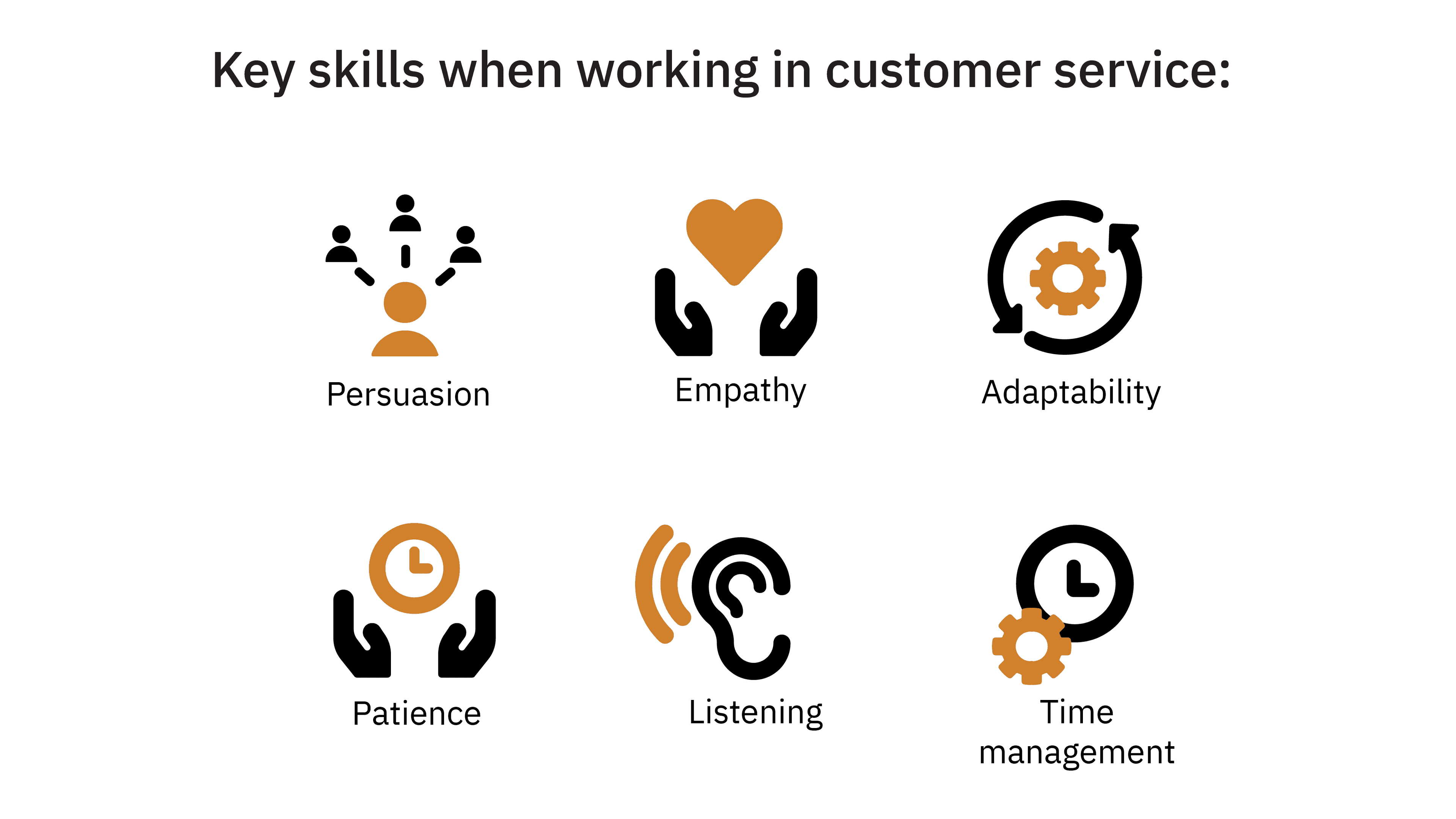
Let’s play persuasion.
Customers want to feel reassured and understood when interacting with a support agent. Using their skills of persuasion, agents can help to build trustful relationships, make sure that requests and inquiries are resolved in a timely manner, and work more efficiently when communicating a brand’s products or services. It’s also a particularly useful skill to have in stressful situations, when it might be necessary to calm a customer down or keep them in the loop about difficult news.
Another great benefit of the ability to persuade is the corresponding ability to cross- and upsell to customers. This is an evolving area of CX for brands, and an excellent opportunity to create even more profit and loyalty from your consumer base. With great persuasion, you’ll be better equipped to handle anything a customer might throw your way.
Have a heart.
Empathy is a key customer service representative skill. Being able to understand a caller’s needs and respond in an understanding manner can help reps build trust and loyalty. If a consumer feels that they’ll hear a thoughtful, kind, and sympathetic voice on the other end, they’re more likely to get in touch with your brand if they need support instead of automatically switching to a competitor - which happens more often than you might think.
Empathy also helps support teams better assess the issues that come to them, as well as provide solutions quickly and efficiently. With empathy, CX reps can ensure customers leave their service experience feeling satisfied and valued.
Adapt to thrive.
Switching from one channel to another, learning new technology, resolving requests that range from simple data input all the way to complex technical questions and long-term solution management - all of these scenarios are possible even in just one day of working as a support agent. Which means that adaptability is an important skill for them to possess.
What are some key hard and soft customer service representative skills?
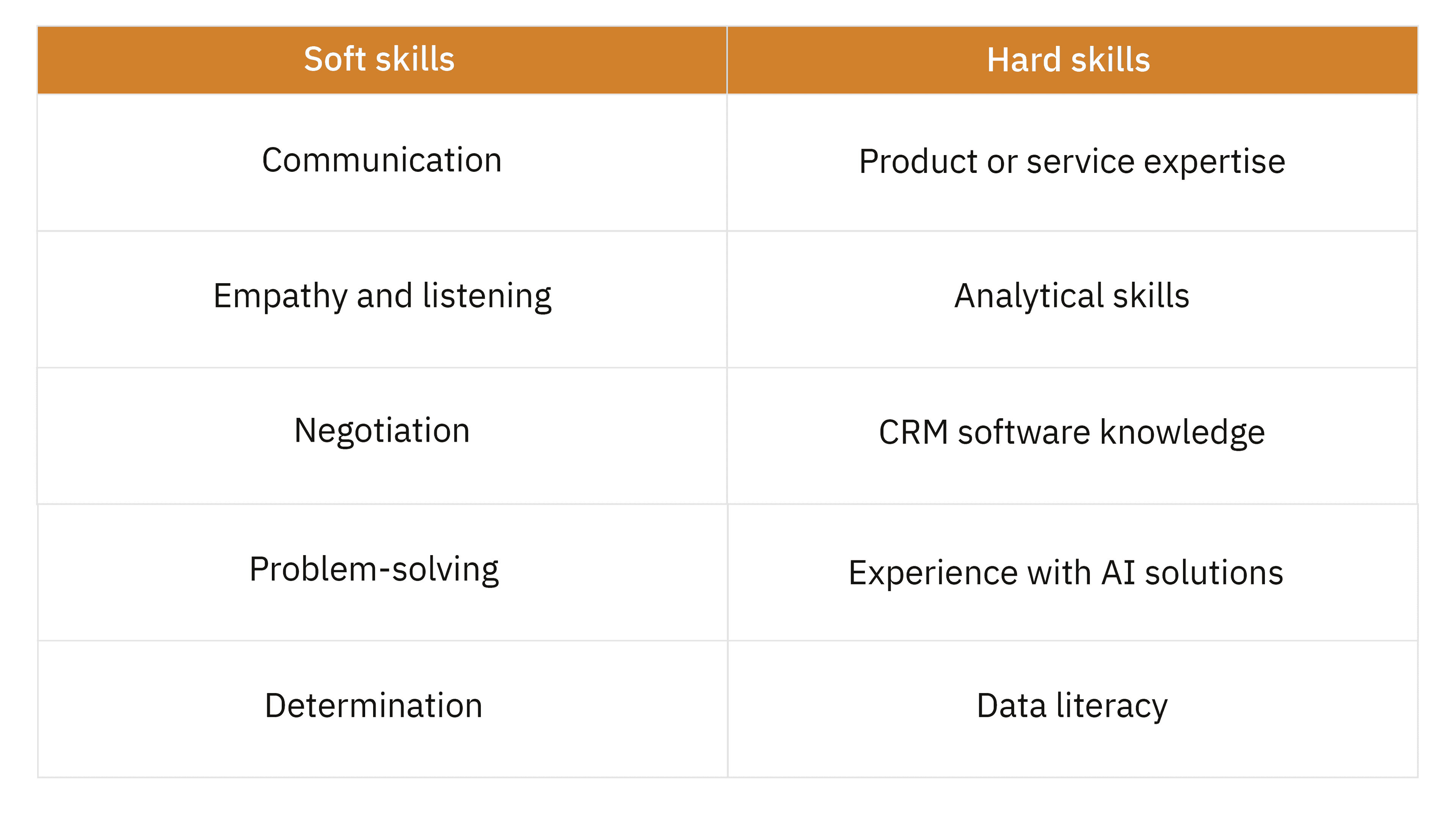
The soft skills.
Having a range of customer-focused soft skills allows anyone working in customer support to be successful. These customer service representative skills include excellent communication abilities, active listening, problem solving and conflict resolution, customer empathy and negotiation. Additionally, reps should also have patience and the ability to manage difficult situations in a professional manner.
The hard skills.
When it comes to hard skills, agents should have excellent knowledge of software such as CRM databases and ticketing systems. Additionally, they should also have a solid understanding of the company's product or service offerings, so that they can assist customers more effectively. Furthermore, they should also possess good technical writing and CX writing skills, as well as data literacy skills. It might even be beneficial for them to have experience working with AI-based solutions such as chatbots or translators.
In the world of tech.
Modern customer service teams should be tech-savvy and have the ability to use CX software, customer relationship management (CRM) software, analytics tools, surveys, social media channels, and chatbots. Additionally, reps might have basic knowledge of computer programming in order to make small changes or tweaks to service software or databases.
Working in customer support using voice channels may also necessitate confidence in using more complex phone and IVR systems, whilst still being able to gather feedback through surveys and queue their inbound calls. Analytics tools can provide applied insights that better a brand’s understanding of their users’ needs and preferences. Finally, CX teams could also be tasked with monitoring feedback platforms such as reviews and ratings websites in order to monitor satisfaction levels and ID pain points.
Read more

Created at Fri Oct 09 2026
10 min read
How to measure the ROI of customer experience investments: formulae, steps, and solutions.
Customer satisfaction might be key to long-term business success, but satisfying today’s CFOs and board members to secure the necessary investments takes hard financial evidence. Discover what CX ROI really means in financial terms and why it’s so critical to your bottom line. We break down the four-step framework you’ll need to measure it in practice - from establishing baselines and determining CX levers, to linking them to financial outcomes and calculating net returns. We’l