zendesk,
automated translation,
AI translation,
chat translation,
Published on Thu May 15 2025
Updated on Thu Jul 10 2025
7 minute read
Translation is a nuanced process that requires hours painstaking effort from the person doing the translating. Or, at least it was. In the world of customer service you barely get minutes per interactions, that's why using Automated Translation in the Zendesk agent workspace can be a lifesaver.
Zendesk is a customer service platform that provides businesses with the tools to efficiently manage interactions with their customers, providing an improved customer experience. It allows you to create customized forms for customer inquiries, respond quickly to incoming inquiries, and personalize responses with tailored automated messages. With Zendesk, your team can work together more effectively with collaboration features such as assigning tasks and tagging customers. Plus, Zendesk has powerful analytics tools to show you how your customer service is doing. All of this helps ensure that every customer interaction goes smoothly. At Transcom, we know that with the right customer service software, you can provide your customers with an exceptional experience. That’s why we’ve been partnering with Zendesk. But we also took it a step further by creating Automated Translation, our AI-powered, real-time translation solution. It quickly and effortlessly integrates into the Zendesk Agent Workspace allowing for quick translation in Zendesk.
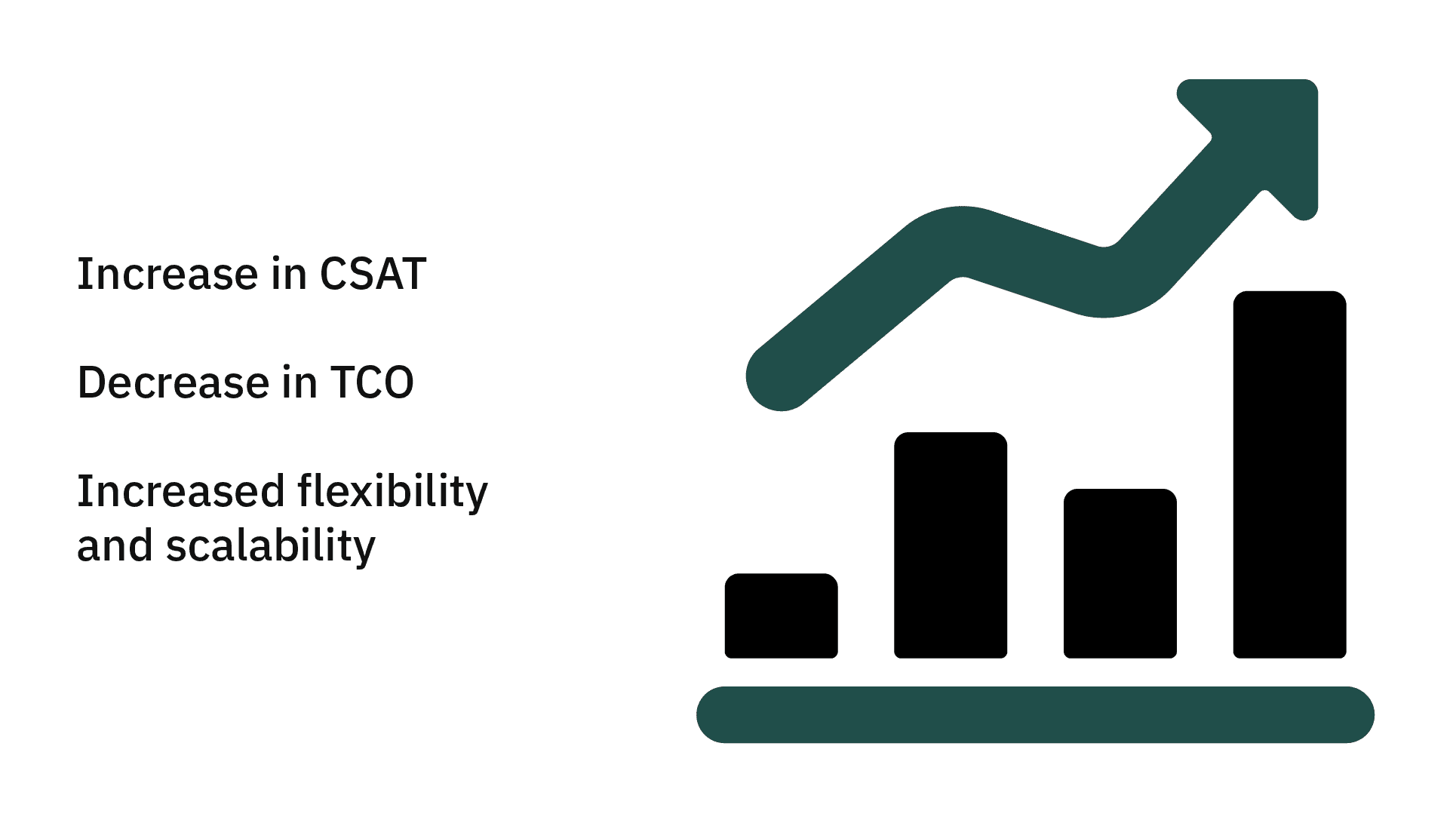
The three main approaches to customer service are hiring agents fluent in the target language, translating to the target language, and using English as a lingua franca if you have a global operation. All three approaches have their pros and cons but translation comes out as a clear winner. The reasons why it’s better to translate are: The increase in customers is found both in translating and in hiring locally. The point here is that customers report increased satisfaction when being able to go through customer support in their own language. That’s why, although using e.g. English as a lingua franca is useful for global companies because it simplifies the operation, it still leads to a negative impact on CSAT. On the other hand, using native speakers can be very costly, dramatically increasing the total cost of ownership. This is due to the fact that some hiring markets are more competitive than others. By using translation you can hire in a more cost-competitive market to provide service in a more expensive one, thus reducing TCO while still having no or having a positive impact on CSAT. Lastly, the thing that using a lingua franca and translation in the Zendesk Agent Workspace have in common, it allows for increased flexibility and scalability of operations. By having agents that are practically omnilingual you can easily transfer them from project to project or market to market, depending on where they’re needed based on the volume of calls. Taking all of this into account, it’s easy to see why translation is fast becoming the best option for providing multilingual customer service or simply effective and efficient customer service, to begin with. While all three approaches have their plus sides, translation is the only one that tackles all the problems successfully and provides all the bonuses that other approaches give. You’re probably wondering: “Then why doesn’t everyone just use translation?” That’s because not all translation tools are created equal.

There are two distinct possibilities when talking about Zendesk translation. The first is to use the native Zendesk translation tool, and the second is to use third-party software for your translation needs. It’s important to get acquainted with both options to see what works for you and your needs.
The native translation tool Zendesk offers is far from perfect but will definitely work in a pinch. It’s automatically enabled for all users of the Agent Workspace, and it works by sending data to Google Translate which then translates from the starting to the target language and vice versa.
The biggest pro of this tool is that it is built into Zendesk. Meaning that translation doesn’t take much time. The negative part is that the quality of translation isn’t as good as it could be, the glossary is general and it works only with text.
On the other hand, you could use a third-party tool. That’s the beauty of Zendesk, seamless integration with countless third-party tools and solutions. At Transcom, we have developed Automated Translation, an AI-powered, real-time translation solution with full Zendesk integration in the blink of an eye.
Not only that, but Automated Translation is capable of near-instant translation in both text and voice channels. This makes us the only BPO that provides both voice and text translations with the help of AI, and we do it in over 100 languages with a 97% accuracy to boot. This was done by harnessing the power of AI and Large Language Models to create an organic-sounding translation that can be customized to fit specific needs.
We provide a customizable glossary so that you can be sure that the translation accurately fits your niche and that it represents your brand and messaging. This way, your customers feel like there is no middleman, or in this case middleAI, and they are served consistent and uniform messaging across channels.
Another great thing about Automated Translation is that it adds only a single click to the agent workflow. This means that your agents won’t need any extra training to use it, and both them and you can reap the benefits practically immediately. We also made speed a priority because no customer will wait minutes on end for a message, no matter how well-translated it is. And, of course, by using LLM and AI we have ensured near-perfect accuracy in a wide range of languages, making sure your agents are perfectly understood, and your customers are happy.

Created at Thu Apr 23 2026
4 min read
One of the recurring themes in AI research is how close we might be to an Artificial General Intelligence (AGI). This is often described as a superintelligence - a system that would surpass the human brain and therefore create a dangerous situation where our machines can outthink and outsmart their creators.
It is an honest debate with well-known supporters. [The CEOs of OpenAI, Google DeepMind, and Anthropic](https://ai-2027.com/

Created at Tue Apr 14 2026
2 min read
What motivates our people to strive for the best? It’s not a mere matter of discipline, it’s the devotion that emerges when passion meets purpose. At Awesome CX, our employees do more than come to work. They show up as part of a community. One that believes customer experience is rooted in human connection, shared values, and the relationships built along the way.
Much of our work is centered on helping brands support their customers. This year, however, we took a moment to turn that focus

Created at Tue Apr 07 2026
4 min read
When you hear customer experience, you probably think of a frontline function. What comes to mind: response times, tone of voice, escalation paths, or another factor that seems downstream of your operational core? It’s time for a CX reality check.
Far from being a procedural extension of a stable system, customer experience is shaped by - and shapes - your business’s constant transitions. When warehouses migrate, when platforms change, when regulations evolve, ‘frontline’ decisions must be