What is an ecommerce chatbot and why do you need one?

Chatbot,
Published on Thu May 15 2025
Updated on Fri Aug 08 2025
10 minute read
With ever-more demanding customers, the shift to online shopping, round-the-clock service, and one of the biggest booms any industry has seen in recent years, e-commerce has become a playground for digital innovation and advancement. In particular, with huge steps being taken in the fields of machine learning, RPA, and Natural Language Understanding (NLU), AI-powered tools have emerged as kings of the sandpit. With some claiming that the market for ecommerce bots will grow to $9.4 billion by 2024, now is the time to get interested in this topic. But what exactly is a chatbot in ecommerce, and how could it help you with your operations, or your peak management? Our guide is about to tell you just that.
What is a chatbot in ecommerce?
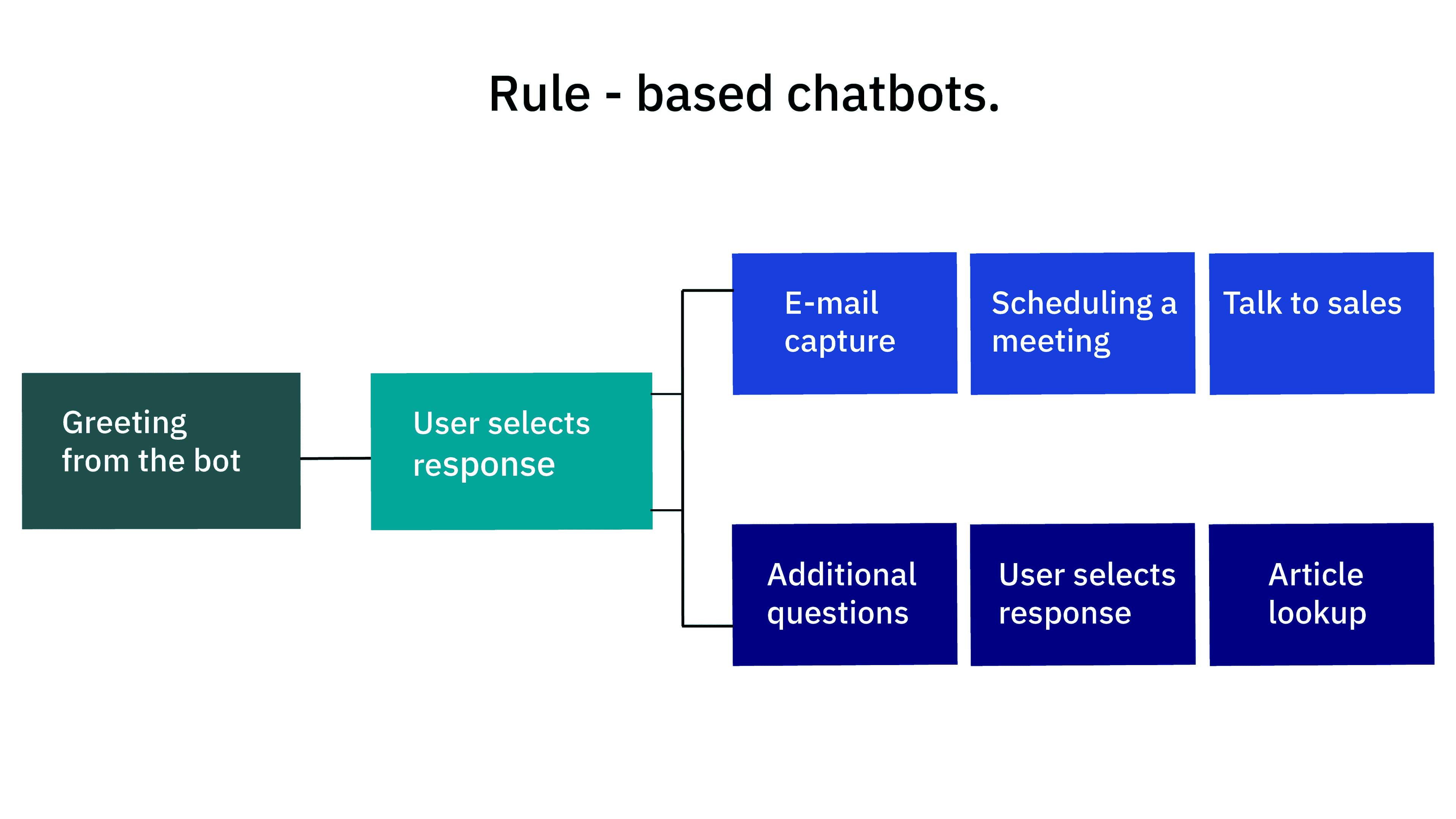
Rule-based.
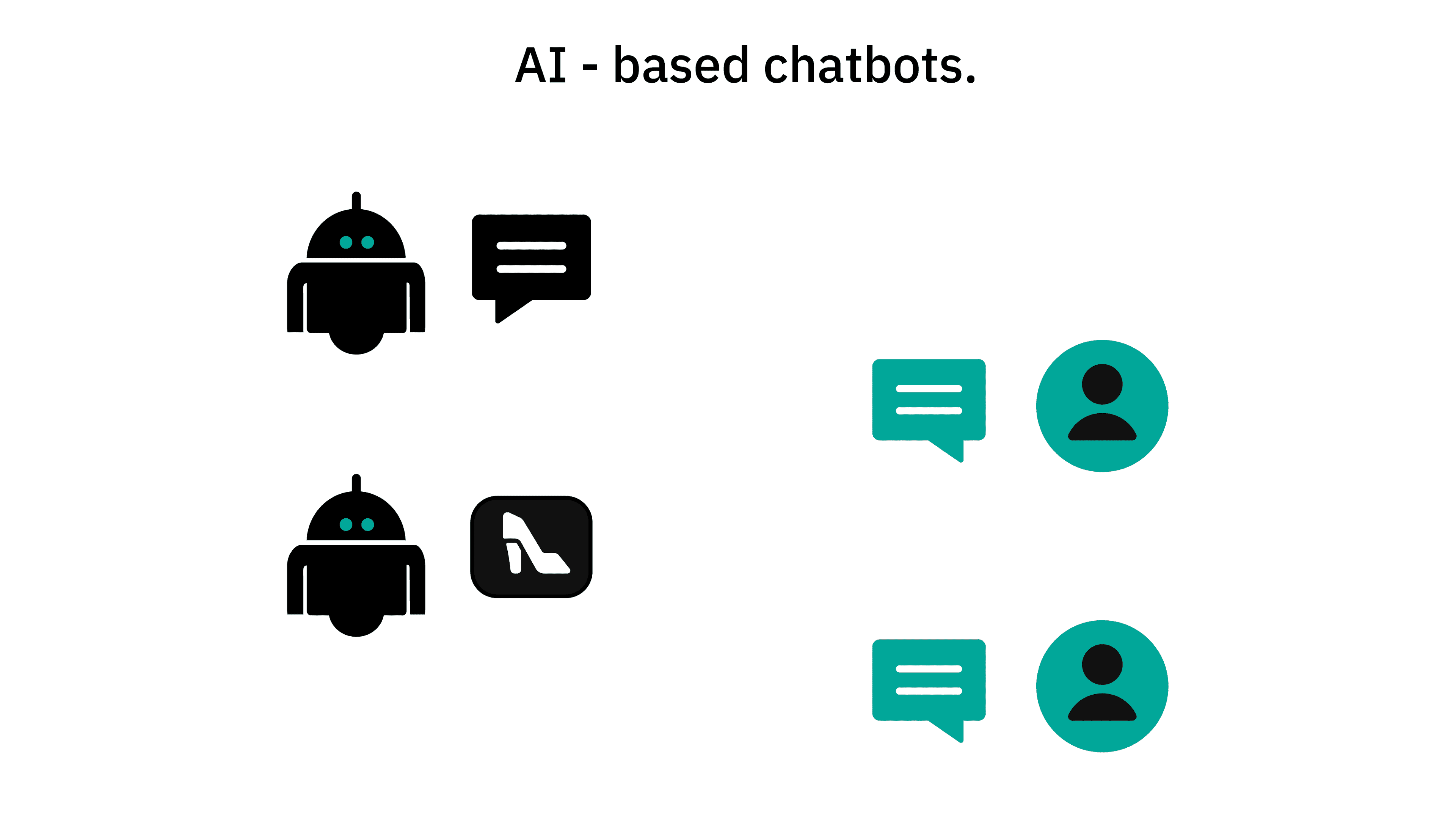
AI-based.
How do they work?
- Using a chatbot platform. There are many different platforms available that you can use to create your own. These platforms will provide you with everything you need to create and manage your bot, including templates, tools, and support.
- Hiring a development company. You can also hire a development company to create a custom solution for your ecommerce business. This option will be more expensive than using a platform, but it will allow you to create a uniquely branded chatbot that is tailored to your ecommerce business.
- Using a chatbot service. You can also use a chatbot service to create and manage your electronic friend. This option is less expensive than hiring a development company, but it will require you to have some technical knowledge to set up and manage.
- Define your goals.
- Choose a platform / developer / service.
- Keep it simple.
- Test it.
- Regularly update it.
What are the benefits?
Ecommerce bots can save your business time and money. They can improve customer satisfaction by providing quick and efficient customer service. When programmed correctly, they can also help you generate leads and sales.
Increased sales.
One of the main benefits of these solutions is that they can help to increase sales. By providing potential customers with information about your products and services, answering their questions, and directing them to your website or landing pages, a chatbot in ecommerce can persuade customers to make purchases. One study found that 47% of users will consider purchasing items via a bot, and are willing to spend around $55 on these kinds of purchases.
Increased leads.
Chatbots can also help to generate leads by providing potential customers with information about your products and services, answering their questions, and directing them to your website or landing pages. They can also collect contact information from customers, allowing you to create personalized shopping experiences for them at a later date.
Use case - H&M.
Along with its online store, the clothing retail brand H&M developed a chatbot to act as a virtual stylist for its customers. After asking the user a series of questions to determine their fashion preferences, it’is able to build a style persona for the user and create a personalized outfit for them. The user can then choose to ‘shop’ or ‘save’ the items, with the former option redirecting them to the H&M online store, and the latter saving them for later perusal.
By creating a personalized experience for the customer, H&M can streamline sales, create an engaged online community, and most importantly, gather important data on the preferences of its shoppers to use in future promotions and communications. This kind of data-driven lead generation, wrapped in the novelty and fun of a virtual fashion consultant, is what can change the game for an ecommerce business.
Improved customer service.
What should a chatbot be able to do?
Use case - Levi’s.
The clothing retailer Levi’s was facing serious issues with their online store, including too many returns and too many cart abandonments. The company implemented a bot that quizzed customers on their body shape, preferred look, fit, and occasion for wearing jeans, before finally offering personalized jean models for them to choose from. This helped to reduce the number of returns by giving customers exactly what they wanted and needed.
The beauty of the solution is that all the recommendations are synchronized with Levi’s inventory, meaning that cart abandonments were significantly cut. Customers were only offered items that were in stock, and so were less likely to leave without making a purchase due to it being unavailable at the time. The personalized service went a long way towards improving customer satisfaction and loyalty.
Measuring your ROI.
The number of sales generated.
One way to measure your ROI is to track the number of sales that a bot generates. If your solution is successfully convincing customers to make purchases, it will have a positive ROI.
The number of leads generated.
Another way to measure your ROI is to track the number of leads that it generates. If the application is successful at convincing potential customers to learn more about your products or services, it will have a positive ROI.
The number of customer service inquiries resolved.
You can also track the number of customer service inquiries that the bot resolves - a higher number of resolved issues equals a positive ROI.
The amount of time saved.
Chatbots can also save your employees time by taking on simple tasks, such as answering FAQs or providing product information. This can free up your employees to focus on more complex tasks, which can lead to increased efficiency and productivity.
What are some of the challenges?
Use case - PG Tips.
As part of their Comic Relief campaign in 2017, PG Tips, a British tea production company, developed a campaign which utilized its beloved mascot - the tea-loving Monkey. Users were encouraged to start a chat with Monkey online and could ask it to tell them a joke. After the joke was told, users were then presented with the option to share it on Twitter or Facebook, or make a donation to the Red Nose charity.
Whilst the campaign was overall quite successful in engaging the British public, some complaints were directed towards the bot for sending users jokes that were simply not funny or even inane. This is the perfect example of a bot that may have made mistakes and not been functional, yet still managed to make an impact as part of a targeted marketing campaign.
How can customer feedback improve your chatbot in ecommerce?
- Ratings. You can ask your users to rate their experience with your chatbot on a scale of 1 to 5. This can help you identify areas where you’re doing well and areas where you need improvement. Similarly to customer sentiment rating, this is a vital metric to determine whether your solution is achieving the targets you have set.
- Customer surveys. You can also send out customer surveys to collect feedback. Asking about how the persona is received, whether the bot felt natural, whether it helped solve the customer’s issue or even enhanced their experience is important data.
- Usage logs. You can also review your logs to see how bots are being used and identify areas where it can be improved. By working with a development team or a vendor, you can gain access to a variety of metrics that analyze average interaction time, resolution time, waiting times, and much more.
Some other key takeaways.
These applications can be time-limited.
Depending on what you have planned for the future, you might find that the best way your business can utilize a chatbot is for a time-limited, specific campaign. Whether it’s for marketing, as part of a test phase for customer support, or simply exploring a new channel, it may be that your tool is something that stays with you for a good time, but not a long time.
Personality is everything.
Don’t underestimate the power of character. By developing your chatbot in ecommerce with a persona in mind that is appropriate for your target audience, you can increase interest, customer loyalty, and satisfaction all in one fell swoop.
Use case - LEGO.
Ralph the chatbot was first rolled out by LEGO, the multinational toy maker, to help with Christmas sales in 2017. LEGO spent a lot of time developing an appealing character and personality that would remain distinct in the minds of its consumers, and the result was a 25% in all social media sales and a 71% reduction in cost per conversion.
What we can all learn from Ralph, is that having a distinct character can be a huge boon, and may even make your customers more forgiving in the face of potential malfunctions or errors. For some, AI-powered pals may be a tough pill to swallow, but putting a friendly face to them can help ease the transition.
Don’t be afraid to make mistakes.
This technology is constantly evolving, adapting, changing. What this means is that ideas and tools that work now may become obsolete very soon. Make sure you keep up with the latest trends in this area, to ensure you don’t fall behind.
Bots need human friends.
As much as all the benefits of an AI chatbot in ecommerce may have you thinking that they’re an excellent alternative to agent interactions, the truth is that both have to work in tandem. A bot can streamline your operations, increase efficiency, and take some of the workload off your human team's shoulders. However, you still need people who can direct it, program it, and in case a customer prefers interacting with another person, step in to help.
Read more
Created at Fri Oct 09 2026
10 min read
How to measure the ROI of customer experience investments: formulae, steps, and solutions.
Customer satisfaction might be key to long-term business success, but satisfying today’s CFOs and board members to secure the necessary investments takes hard financial evidence. Discover what CX ROI really means in financial terms and why it’s so critical to your bottom line. We break down the four-step framework you’ll need to measure it in practice - from establishing baselines and determining CX levers, to linking them to financial outcomes and calculating net returns. We’l