AI,
customer service,
Published on Thu May 15 2025
Updated on Fri Aug 08 2025
7 minute read
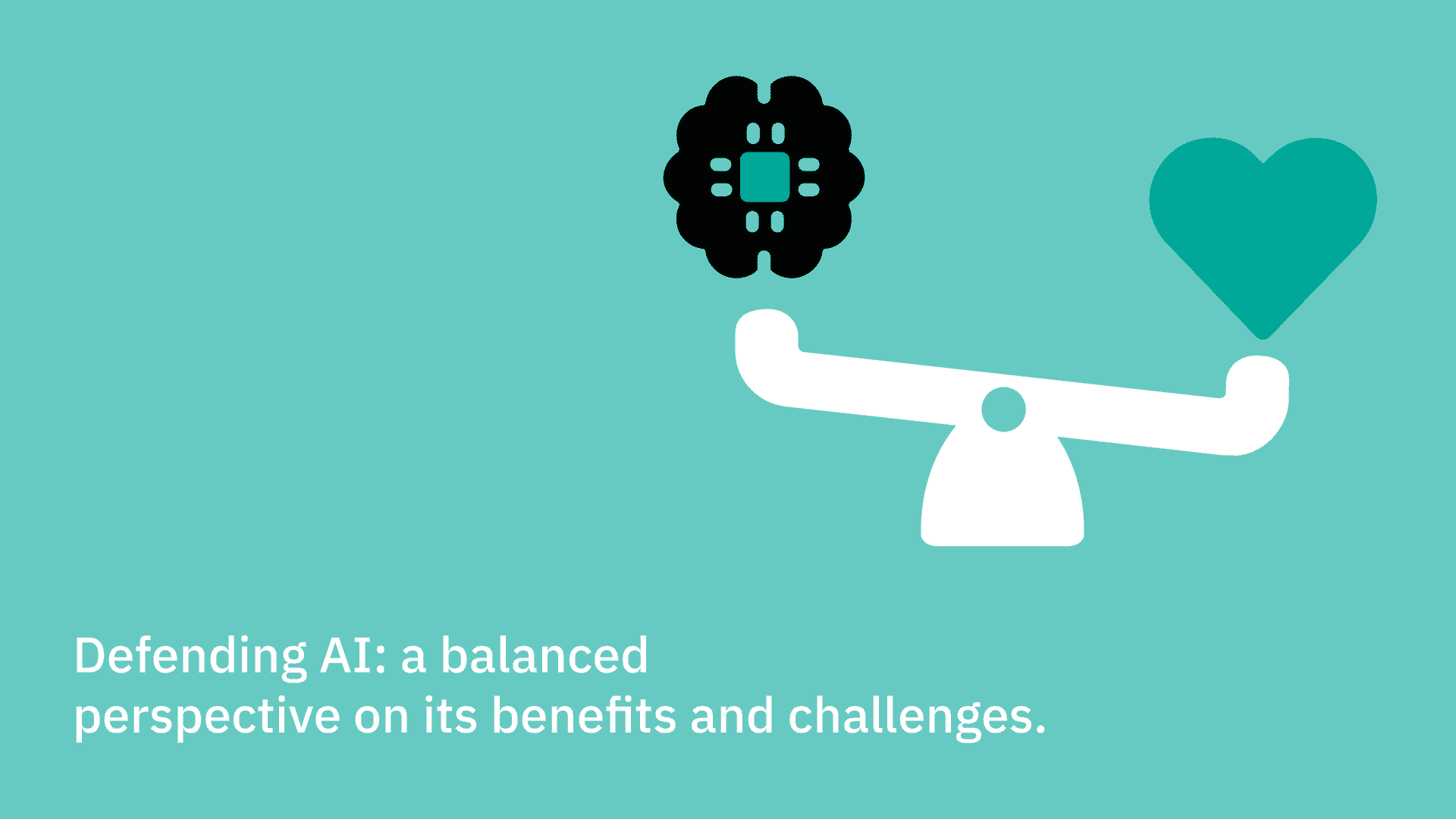
As we navigate the dawn of the AI era, I feel compelled to defend the transformative potential of artificial intelligence. Humans have a natural tendency to focus on negative news. This negativity bias explains why headlines often highlight the dangers of AI. Stories about AI replacing jobs dominate the news, overshadowing the technology's potential benefits. For example, Forbes recently claimed that AI is taking over accounting jobs, and the Washington Post suggested that chatbots might render human customer service agents obsolete
While AI presents challenges, it offers immense benefits that can enhance our lives and work. Brilliant minds are dedicated to ensuring AI technology is safe and ethically sound. Humanity has always faced fears and challenges with new technologies, much like we did during the Industrial Revolution. Initially, there were significant concerns about job loss and societal upheaval, yet today, we reap the benefits of industrial advancements. Handcrafted items have even become premium products, valued for their unique quality. I'm not a futurist, but I see that some consumers may prefer and pay a premium for exclusively human interaction. This resonates with those experienced in CX, where the human touch has always been crucial. As AI evolves in customer service, the value of human empathy and personalized communication could become a luxury service. Some customers might prefer the nuanced, emotionally intelligent interactions only humans can provide, especially in sensitive and complex situations. I recommend you listen to Anders Sorman-Nilsson's LinkedIn post, in which he thoughtfully discusses the authentic human voice and its distinctions from AI-generated speech. Let me balance our discussion by highlighting the practical benefits of AI that we are already seeing today
In customer service, AI not only enhances operational efficiency but also helps businesses cultivate stronger and more meaningful relationships with their customers. Integrating AI in CX operations can significantly reduce costs by optimizing resource allocation and decreasing the workload on human agents. Here are some of the most popular use cases I have seen. Agent Assist enhances customer service interactions, boosting agent performance, quality, and sales. This strengthens customer relationships and lowers total costs. Agent Trainer GenAI technology enables training bots to replicate human conversations using various personas and intents. It also offers valuable feedback on agents' performance, highlighting areas for improvement. Callbacks offers fully automated callback software designed to maximize reachability and streamline workload management in service centers. Insights empower leaders and teams to identify patterns and trends, leading to better service and business enhancements. Machine learning enhances efficiency and personalizes customer experiences through data-driven insights and predictions. Conversational Analytics empowers businesses to boost efficiency and deliver personalized customer experiences. Clear, data-driven insights and predictions help you make informed decisions and stay in control of interactions with your customers. IVR improves customer interactions by replacing outdated keyword-based and traditional IVRs with a natural language approach. This ensures accurate routing and enhances customer experience, ultimately reducing your total cost of ownership. Knowledge Base Assist seamlessly connects to existing knowledge sources, organizing, updating, and delivering relevant and contextual information right at your agents fingertips. Real-time Translation instantly translates text and voice conversations, enabling access to cost-effective locations, managing real-time peaks efficiently, and significantly reducing TCO.
A common theme emerges in these positive applications: AI is a tool that helps professionals perform better. It’s not about replacing radiologists, teachers, or customer service agents but augmenting their abilities. AI can make accountants more productive, improve customer self-service options, and act as a real-time digital adviser in contact centers.
As we embrace AI's potential, addressing concerns and ethical considerations is essential. Many experts are working diligently to ensure AI technology is safe, fair, and beneficial for all. Balancing these concerns with progress is crucial to maximizing AI's positive impact on society. While the media may highlight the potential downsides, AI holds the promise of creating a better, more efficient, and more connected world. By focusing on its positive aspects, we can work on improving its weaknesses.

Created at Tue Apr 14 2026
2 min read
What motivates our people to strive for the best? It’s not a mere matter of discipline, it’s the devotion that emerges when passion meets purpose. At Awesome CX, our employees do more than come to work. They show up as part of a community. One that believes customer experience is rooted in human connection, shared values, and the relationships built along the way.
Much of our work is centered on helping brands support their customers. This year, however, we took a moment to turn that focus

Created at Tue Apr 07 2026
4 min read
When you hear customer experience, you probably think of a frontline function. What comes to mind: response times, tone of voice, escalation paths, or another factor that seems downstream of your operational core? It’s time for a CX reality check.
Far from being a procedural extension of a stable system, customer experience is shaped by - and shapes - your business’s constant transitions. When warehouses migrate, when platforms change, when regulations evolve, ‘frontline’ decisions must be

Created at Thu Apr 02 2026
3 min read
AI is accelerating faster than enterprise operating models were designed to handle. In every organization, transformation is underway. Roadmaps are expanding, budgets are shifting, and expectations from boards and customers are rising. But acceleration without structure creates volatility - and customer experience is no exception to the rule. While technology introduces possibility, leadership determines whether that possibility becomes measurable value or a mere disruption.
Navigating this ten