Published on Thu May 15 2025
Updated on Fri Aug 08 2025
5 minute read
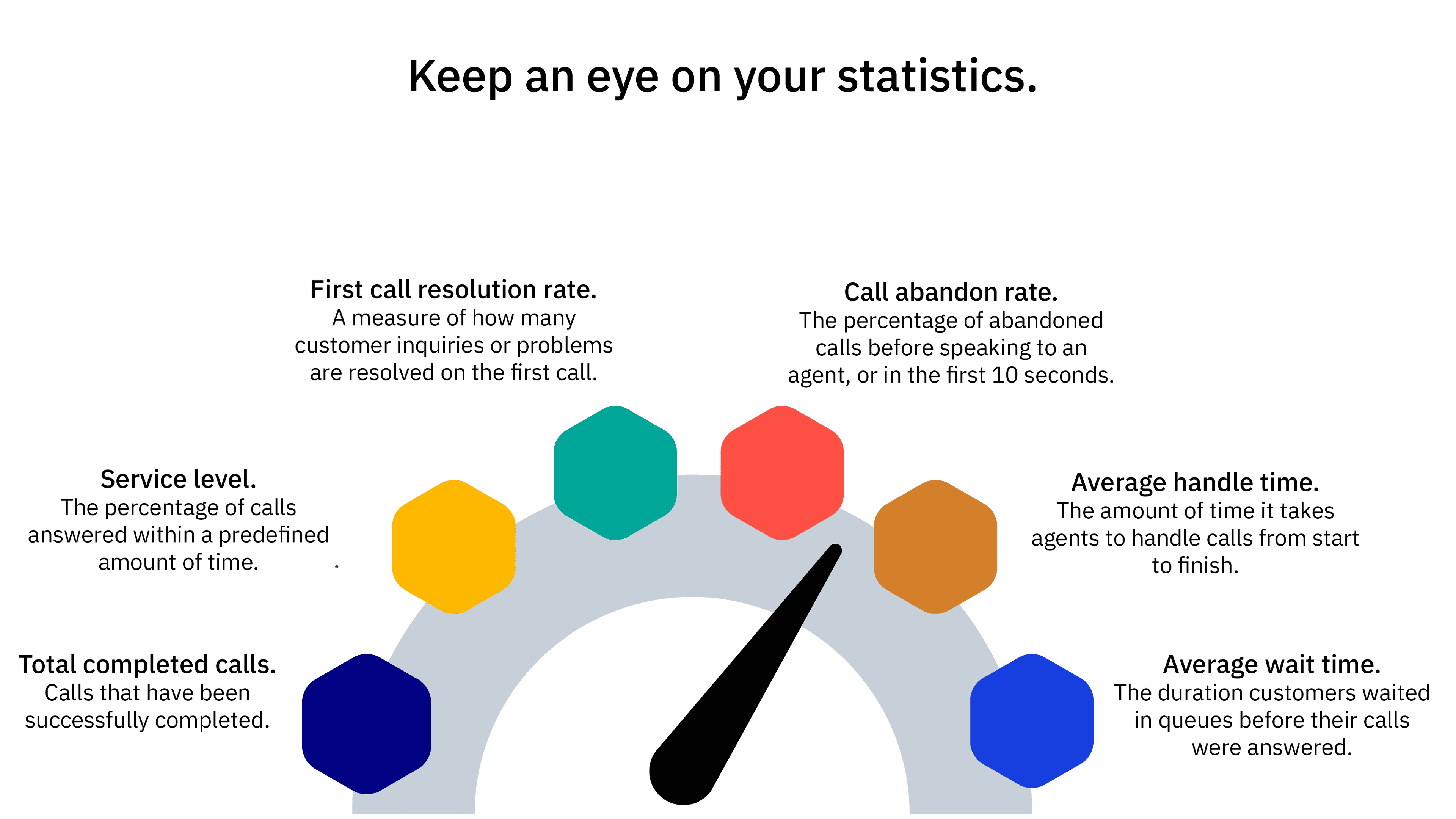
Of course, not all of these statistics may matter to your business - that will depend on your targets, strategy, and whether you’re in the middle of peak management planning. However, any one of these can help you better understand how your customer experience is going and develop data-driven tactics for areas that need improvement.
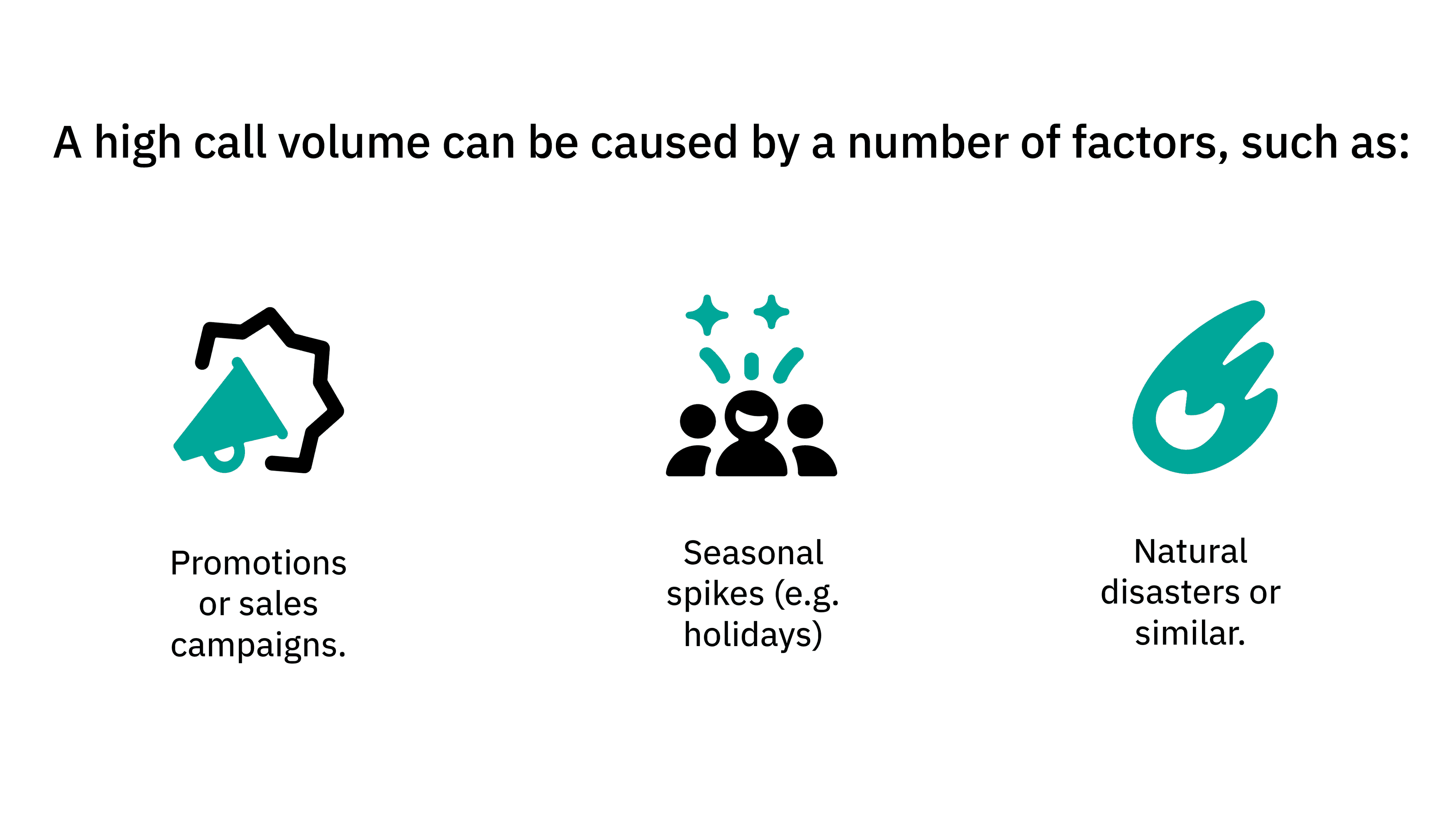
If you’ve been in the game for enough time, you’ll know that no day is quite like the next. Whilst this can be for a variety of reasons, one of the biggest challenges in the industry are surges in call volumes in a contact center. And without a good peak management plan in place, they can throw any brand for a loop. A high call volume is defined as a contact center receiving a high number of inbound calls within a short period of time.

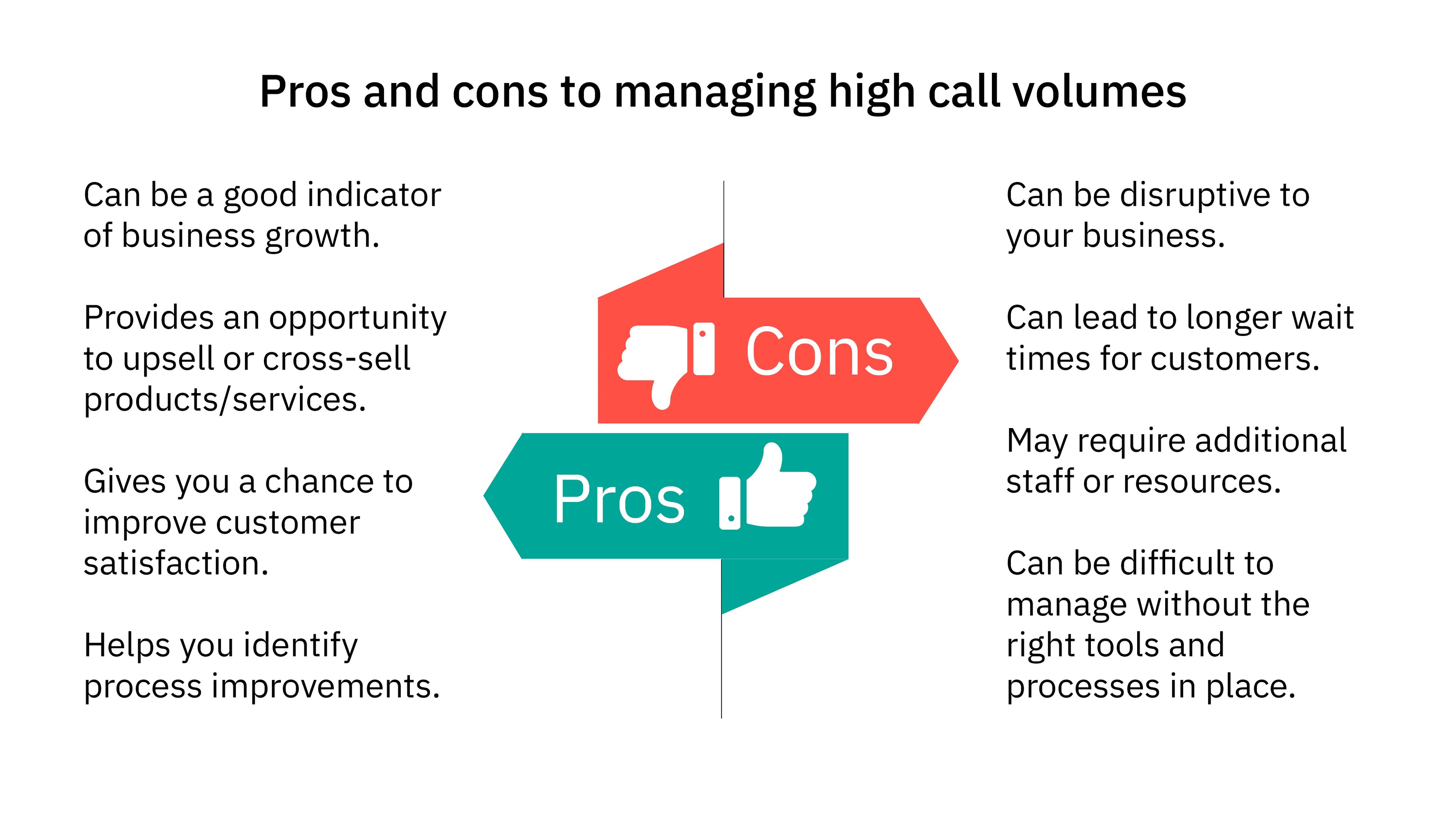
Though it may seem like managing high call volumes is an uphill battle, there are two sides to the story. There are a few pros and cons to consider, such as:

As part of managing your business, one of your priorities is to ensure that your team and operation is equipped to handle times like these. There are a number of strategies you can use to effectively handle greater inbound volumes in your contact center.
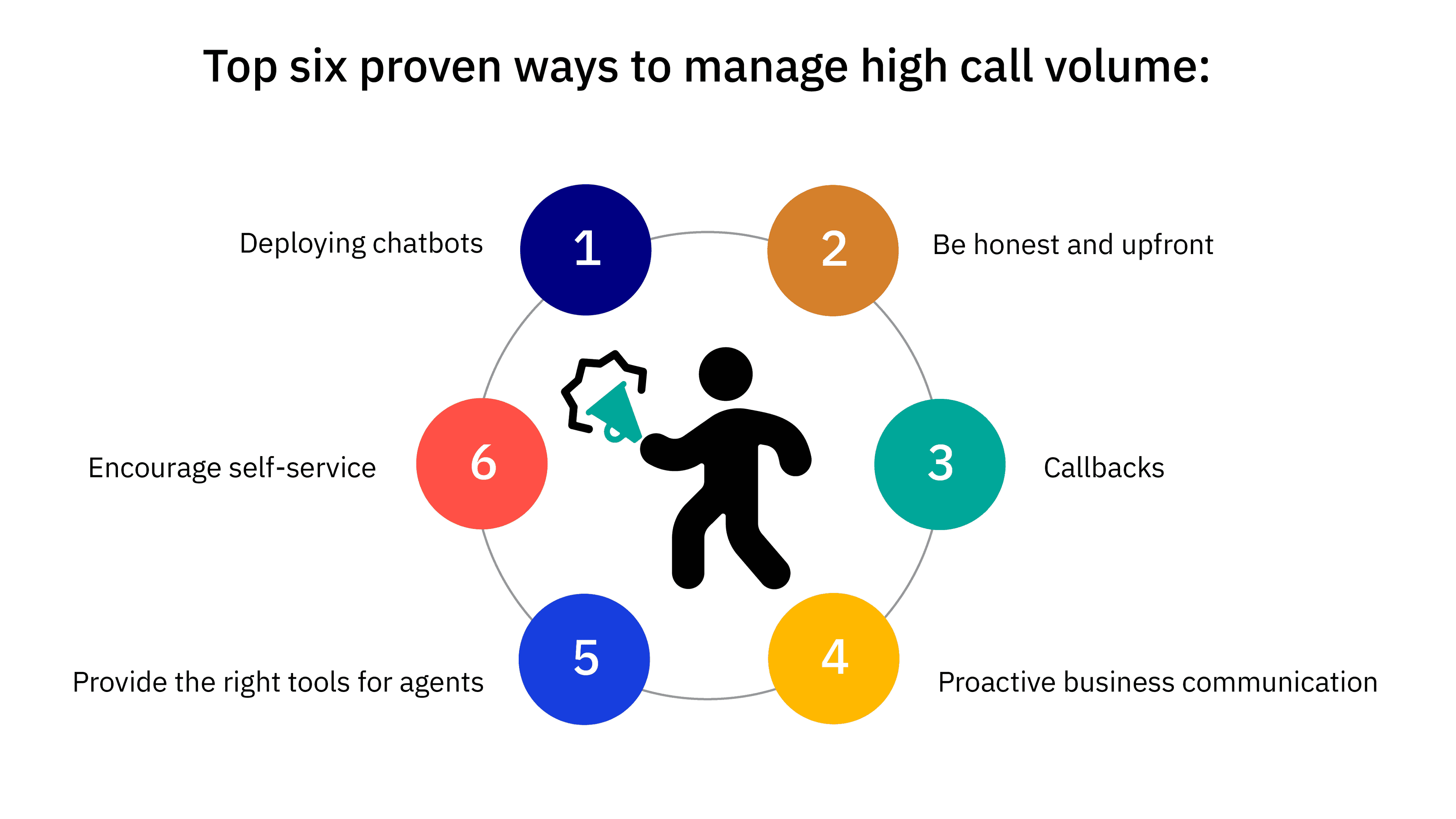
One of the best ways of managing high call volumes is to implement a call queuing system. This will allow your team to better handle large numbers of inbound calls by managing them in an orderly fashion. It also allows you to distribute incoming messages across various teams and even locations.
Another effective strategy for managing surges like these is to offer call deflection options to customers. This will allow them to avoid waiting on hold for long periods of time. Some studies show that 75% of customers prefer a callback to waiting on hold.
If you find that your team is struggling to keep up with the demand, it may be necessary to hire additional staff. This will ensure that your team is better able to handle the day-to-day of your contact center. By forecasting when there might be a surge, you can plan ahead for recruitment and training of new hires - more on that later.
It’s important to provide training to your staff that will ensure they are equipped with the skills and knowledge necessary to manage large numbers of calls successfully, efficiently, and without compromising on customer experience. An excellent way to do this is through gamification - by creating an educational game that agents can play on their phones or desktops, you can incentivize them to improve their skills while competing for prizes or other rewards. This kind of gamification can reduce learning curves by 60% and AHT by 63%!
Everyone knows that data is key, both in forecasting when call surges may happen and in analyzing how well your customer service agents are handling them. Some of the most important numbers to keep note of are:

We’ve spoken about managing high call volumes, but have you heard of high volume callers? A high volume caller is defined as a customer who calls the contact center frequently or who has a significant number of questions or requests. Usually, these individuals fall into one of two categories: they love your brand and use your products or services often, or they are having serious issues that aren’t being resolved. So while some of them may be happy with the quality of service they receive, others may become frustrated if they feel like they’re not getting the attention they need.

Created at Fri Mar 27 2026
5 min read
Leaders’ most valuable insights don’t come from their titles. They come from lessons learnt along real professional journeys. That’s the wisdom behind our Leading Voices series charting the careers and challenges of the real pioneers behind the future of customer experience. And there couldn’t be a richer example than the story of Julie ‘Jam’ Barton. With more than 16 years of experience across both client and BPO environments, she now leads global training and communications for member servic
It’s important to provide self-service resources for customers who are trying to avoid waiting on hold. This can be done by implementing an IVR system or by providing a robust FAQ section on your website. IVR can be incredibly helpful in resolving simple inquiries and directing callers to the right person to handle their issue, while an FAQ may provide the answer with a simple click to your business’ website.
In managing high call volume, having a robust omnichannel approach in place can make or break operations. This means that your team should be trained in how to effectively use all of the available channels (phone, messaging, email, chat, social media, etc.) to help customers, and all of these channels must be accessible and communicated. By offering more channels, you can lower the number of incoming calls and increase volumes in other - more cost-effective - channels. Not only that, but these channels are more often preferred by customers. Transcom Connect provides this interconnectivity of systems at a click, allowing teams to provide customer service in multiple channels within a single interface. Contact us to learn more.
By implementing next-gen digital solutions dedicated to making the customer and agent experience even more seamless, you can have a huge impact on satisfaction levels. Proactive communication can let customers know where their orders are (WISMO), what outstanding bills they have, or when they might expect a power outage, which can be combined with chatbots, voicebots, IVR, and other systems.


Created at Tue Mar 17 2026
2 min read
Want next-gen corporate infrastructure that truly works?' Then think of Artificial Intelligence (AI) not as a pretty, design piece of furniture, but as the heartbeat of a modern building - a seismic-resistant, smart system that ensures the entire structure functions intelligently.
Introducing AI into a business without preparing the groundwork is like installing a state-of-the-art elevator in a crumbling building without strengthening the foundations. While the elevator might move quickly, the

Created at Mon Mar 09 2026
4 min read
I can remember when mobile phones became ubiquitous. In the 80s, there were a few early adopters carrying enormous phones around self-consciously, but in the 90s, phones became small enough to fit in your pocket. Companies from my part of the world - such as Nokia and Ericsson - ruled the cellphone market globally. [Now, all those old phones are in museums