What is sentiment analysis?

speech sentiment,
call center,
sentiment analysis,
Published on Thu May 15 2025
Updated on Fri Aug 08 2025
8 minute read
Imagine this. You’ve just hung up the phone on a customer service representative who didn’t do the best job in helping you solve your issue. You feel frustrated, and you want someone to know it. But alas, the conversation is over, and to file a complaint you’d have to go through the effort of searching, typing, sending, and so on. Here’s another example. Remember the infamous Kendall Jenner Pepsi commercial? It ignited a firestorm of negative reactions online, leading to the ad being pulled within 24 hours. This is a prime example of how sentiment analysis, particularly with the power of AI, can dramatically impact business decisions. It’s a tool that’s been in use in the CX world for many years, but never before has it been as crucial, evolved, and insightful as now. So, what exactly is this game-changing technology? Let's dive in.
Understanding the basics: what is sentiment analysis?
What is a sentiment analysis tool?
The inner workings of sentiment analysis (with AI).
Text sentiment analysis: deciphering the written word.
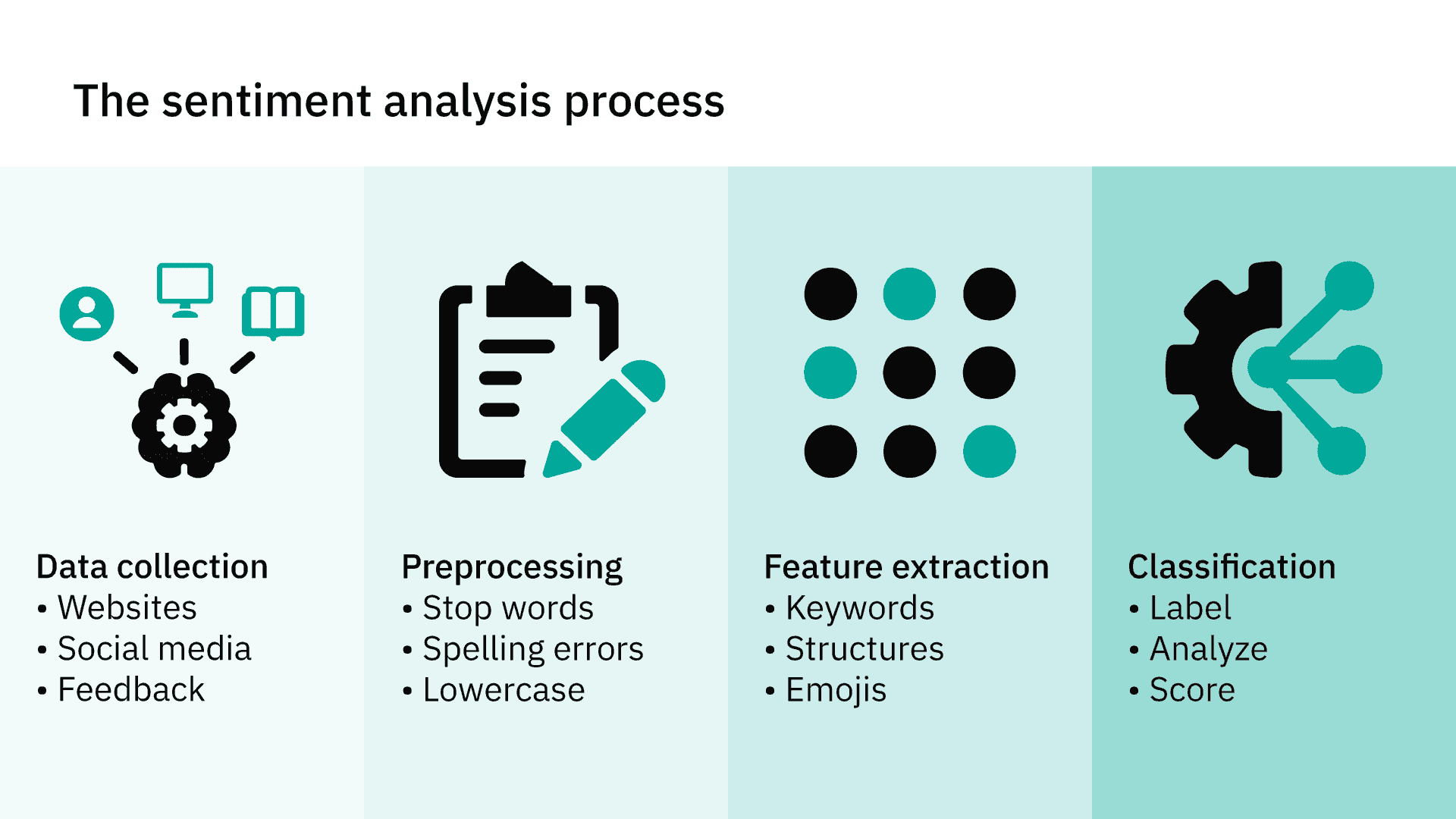
- Data collection: The first step is to gather the relevant text data you want to analyze. This could involve scraping data from websites, using APIs to access social media feeds, or collecting feedback directly from customers.
- Preprocessing: Raw text data is often messy and needs to be cleaned up before analysis. This step involves tasks like removing stop words (common words like "the" or "and"), correcting spelling errors, and converting text to lowercase.
- Feature extraction: This is where NLP techniques come into play. The text is broken down into smaller chunks (words, phrases, or n-grams), and relevant features are identified. These features could be specific keywords, grammatical structures, or even emojis.
- Sentiment classification: This is the heart of sentiment analysis. AI algorithms, trained on vast amounts of labeled data, analyze the extracted features and assign a sentiment score to each piece of text. This score could be a simple positive/negative label or a more nuanced numerical value indicating the degree of positivity or negativity.
Sentiment analysis applications.
Customer experience.
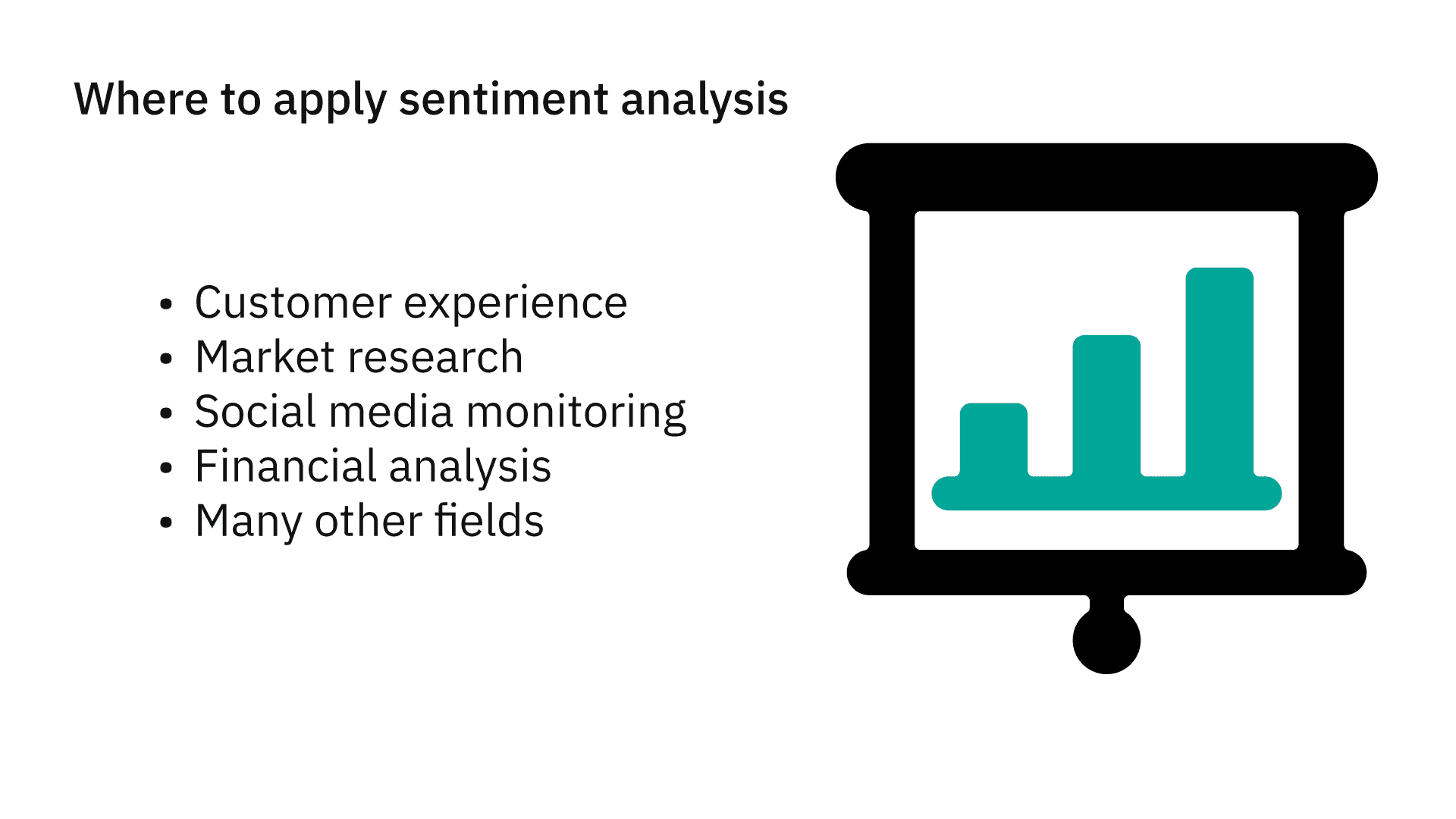
Market research.
Sentiment analysis helps businesses gain a deeper understanding of their target market by analyzing opinions and attitudes about products, competitors, or industry trends. By monitoring social media conversations and online forums, companies can identify emerging trends, customer preferences, and unmet needs.
This information is invaluable for product development, marketing campaigns, and overall business strategy. Sentiment analysis can also be used to track brand reputation and measure the effectiveness of marketing campaigns. As mentioned in the Pepsi ad example at the beginning of this blog, it can even save a brand from greater negative repercussions following an unsuccessful or tone-deaf marketing campaign.
Many companies use sentiment monitoring and brand mentioning tools to keep an eye on how their brand is being perceived, as well as look for gaps in the market that could be filled by new services or products. Sometimes it may even feel as though a brand has magically predicted a hot trend or topic, when in reality, it’s the culmination of millions of data points that have been meticulously analyzed to produce valuable insights. Again, this is a place where AI has excellent applications and can greatly increase the scalability of solutions.
A closer look at text sentiment analysis.
- Fine-grained analysis.
- Intent Analysis.
Sentiment analysis AI in action.
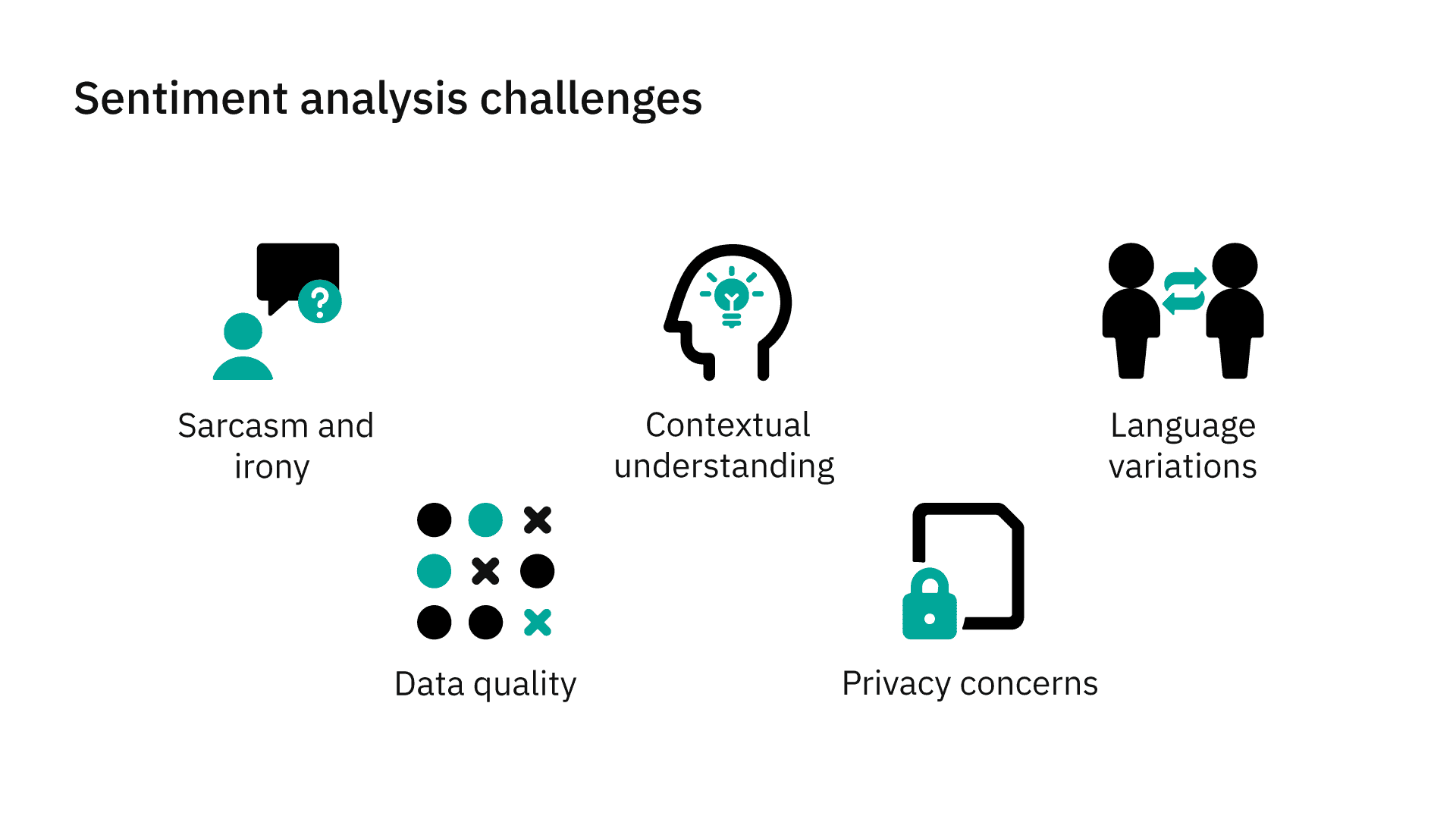
Common challenges in sentiment analysis.
- Sarcasm and irony: Humans often use sarcasm and irony to express their true feelings, which can be difficult for AI models to detect. For example, a comment like "Great job on the new design. It's so ugly, I love it!" could be misinterpreted as positive sentiment.
- Contextual understanding: The meaning of words and phrases can vary depending on the context. For example, the word "sick" could mean "ill" or "cool," depending on the surrounding words. AI models need to be able to understand context to accurately interpret sentiment.
- Language variations: Slang, dialects, abbreviations, and cultural references can pose challenges for sentiment analysis. AI models trained on standard language may struggle to understand these variations, leading to inaccurate sentiment scores.
- Data quality: The accuracy of sentiment analysis heavily relies on the quality of the input data. Inaccurate, incomplete, or biased data can lead to skewed results. For example, if a dataset is predominantly made up of positive reviews, the sentiment analysis model may overestimate the overall positive sentiment.
- Privacy concerns: The use of personal data for sentiment analysis raises ethical concerns about privacy and consent. Companies need to be transparent about how they collect and use data, and individuals should have the right to opt out if they choose.
The role of AI in the future.
- Contextual AI models: New AI models are being developed that take into account the context of a statement, allowing them to better understand sarcasm, irony, and nuanced language. These models use techniques like attention mechanisms and transformers to weigh the importance of different words and phrases in a sentence.
- Transfer learning: This involves leveraging pre-trained models on large datasets and fine-tuning them for specific sentiment analysis tasks. This can help overcome the challenges of language variations and limited data.
- Human-in-the-loop validation: AI is not perfect, and human intervention is often necessary to validate and correct the results of sentiment analysis. This involves having human experts review and annotate data, providing feedback to AI models, and ensuring that the results align with real-world understanding.
- Hybrid models: Combining rule-based approaches with machine learning or deep learning can leverage the strengths of both. Rule-based systems can handle simple cases and provide interpretable results, while machine learning and deep learning can tackle complex language and nuances.
- Ethical considerations: As AI becomes more sophisticated, ethical considerations become increasingly important. Companies need to be transparent about how they use sentiment analysis, ensure that data is collected and processed responsibly, and avoid perpetuating biases in their algorithms.
The future of sentiment analysis.
- More nuanced understanding of emotions: AI models will become even better at understanding subtle nuances of emotions, going beyond simple positive/negative labels. This will allow for more accurate and detailed sentiment analysis, enabling businesses to gain deeper insights into customer opinions and attitudes.
- Real-time analysis and decision-making: Sentiment analysis will become more integrated into real-time decision-making processes. Businesses will be able to instantly analyze customer feedback, social media mentions, and other data sources to identify trends, respond to issues quickly, and make data-driven decisions on the fly.
- Multilingual sentiment analysis: As businesses expand globally, the need for multilingual sentiment analysis will grow. AI models will be able to analyze text and speech in multiple languages, enabling companies to understand customer sentiment across different cultures and regions.
- Emotionally intelligent AI: Sentiment analysis will become a core component of emotionally intelligent AI systems, allowing machines to understand and respond to human emotions more effectively. This could lead to more personalized customer service, more engaging chatbots, and even AI-powered therapists.
Sustainable sentiment.
Effectiveness through diversity.
The effectiveness of sentiment analysis AI hinges on the quality and diversity of the data it's trained on. Training models on diverse datasets that encompass various demographics, dialects, writing styles, and cultural references is paramount to ensure accurate and unbiased results. When AI models are exposed to a broad range of language patterns and expressions, they become better equipped to understand and interpret sentiment across different contexts and demographics.
Neglecting data diversity can lead to biased algorithms that perform poorly on certain groups or fail to capture nuances in language specific to certain cultures or communities. For instance, a sentiment analysis model trained primarily on formal language might struggle to interpret slang or informal expressions commonly used in social media. Similarly, a model trained on data from a specific region might misinterpret sentiments expressed in other dialects or languages. By training on diverse datasets, AI models can avoid such biases and deliver more reliable and inclusive sentiment analysis results, catering to a wider range of users and applications.
Read more
Created at Mon Sep 28 2026
4 min read
Will DeepSeek turbocharge the adoption of AI for CX?
DeepSeek was only founded in 2023. The company is based in Hangzhou, an important port city in Eastern China that has been a strategic hub along the Silk Roads for thousands of years. DeepSeek has been building large language models (LLMs) since the company was created, but the[ 2025 release of their R1 LLM challenged](https://www.techtarget.com/whatis/feature/